
Menu
London's trusted window installation service — call us for a free site survey.

Get a quote
A "sash" is the moving, glazed frame that slides up and down inside a sash window's outer box frame. Here's what the word means, how the counterweight mechanism works, and how to recognise the Georgian, Victorian and Edwardian styles found across London.


No obligation · Free site survey · Reply within hours




The meaning, the mechanism, and how to recognise the different period styles found across London.
Looking to restore your property's heritage? Golden Ratio specializes in Professional Sash Window Restoration across London.
A sash is the moving, glazed frame that sits inside a sash window's outer box frame. The word comes from the French châssis, meaning "frame" — so when someone says "sash window," they're describing a window built around one or more of these sliding frames, rather than a single fixed pane. Most sash windows have two sashes, one upper and one lower, that slide vertically past each other within the box frame. This is what separates a sash window from a casement window, which opens on hinges instead of sliding.
Sash windows are the hallmark of British period architecture. Known for their elegant vertical sliding movement, they have graced London's streetscapes since the late 17th century. In this guide, we explore how the sash mechanism works, its history, and why it remains the gold standard for heritage homes.
A sash window consists of one or more movable panels, or "sashes," that hold panes of glass. Unlike hinged casement windows, these panels slide within a vertical groove. This movement is facilitated by a hidden mechanical system, built from a handful of named parts worth knowing:
Classic London sash windows operate on a clever, hidden mechanical design known as the box frame. Hidden within the hollow timber casing on either side of the window are heavy cast-iron or lead weights. A durable woven cotton sash cord is secured to the side of the wooden sash, runs up and over a brass pulley wheel anchored at the top of the frame, and connects directly to the weights. Because the weight of the timber and glass is carefully balanced by these internal counterweights, the sashes slide smoothly up and down, holding their position at any level instead of slamming shut under their own weight.
As British glass-making techniques advanced over the centuries, the visual layout of sash windows changed dramatically. By looking at the division of the panes, you can often pinpoint the exact era your property was built.
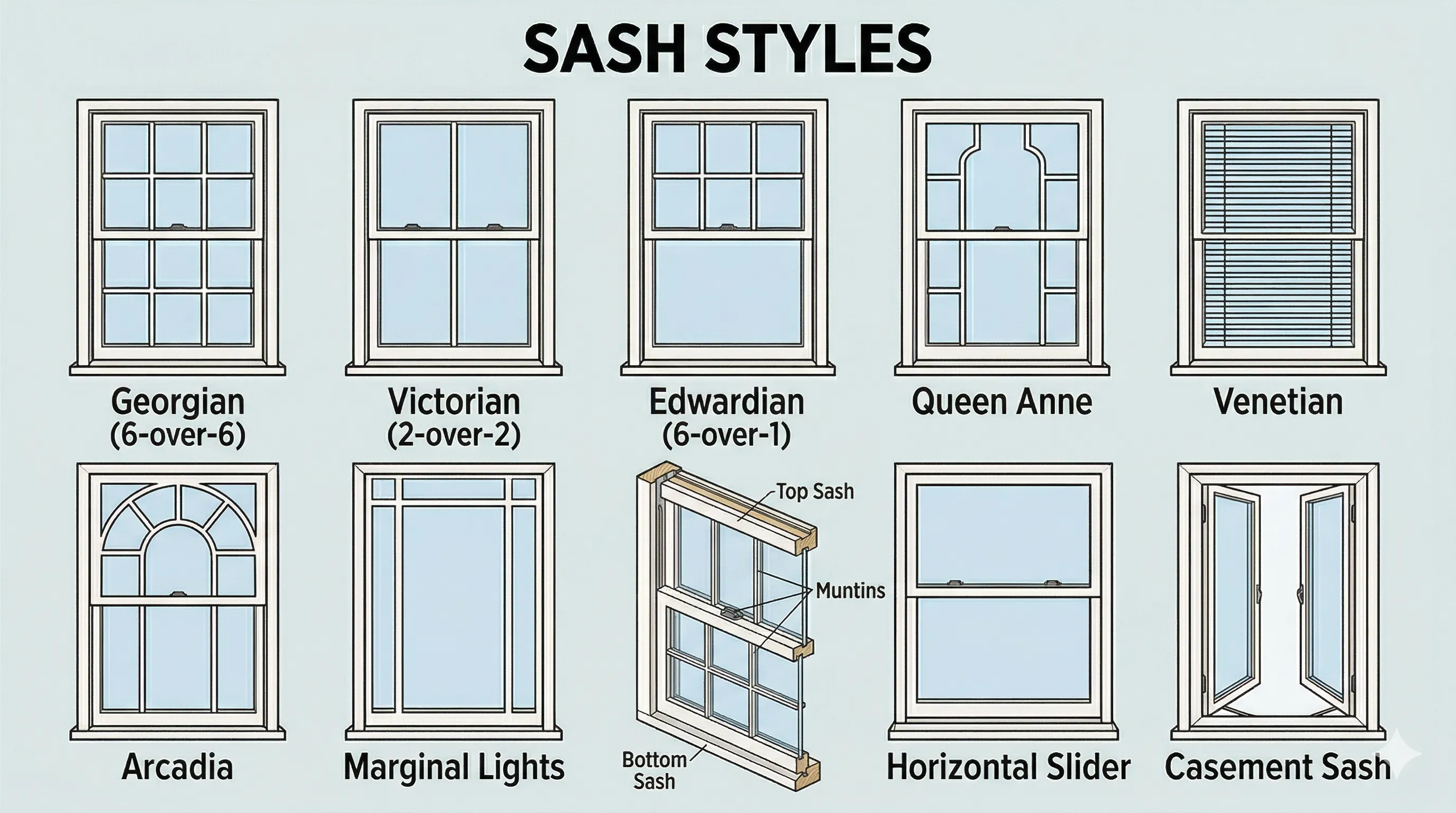
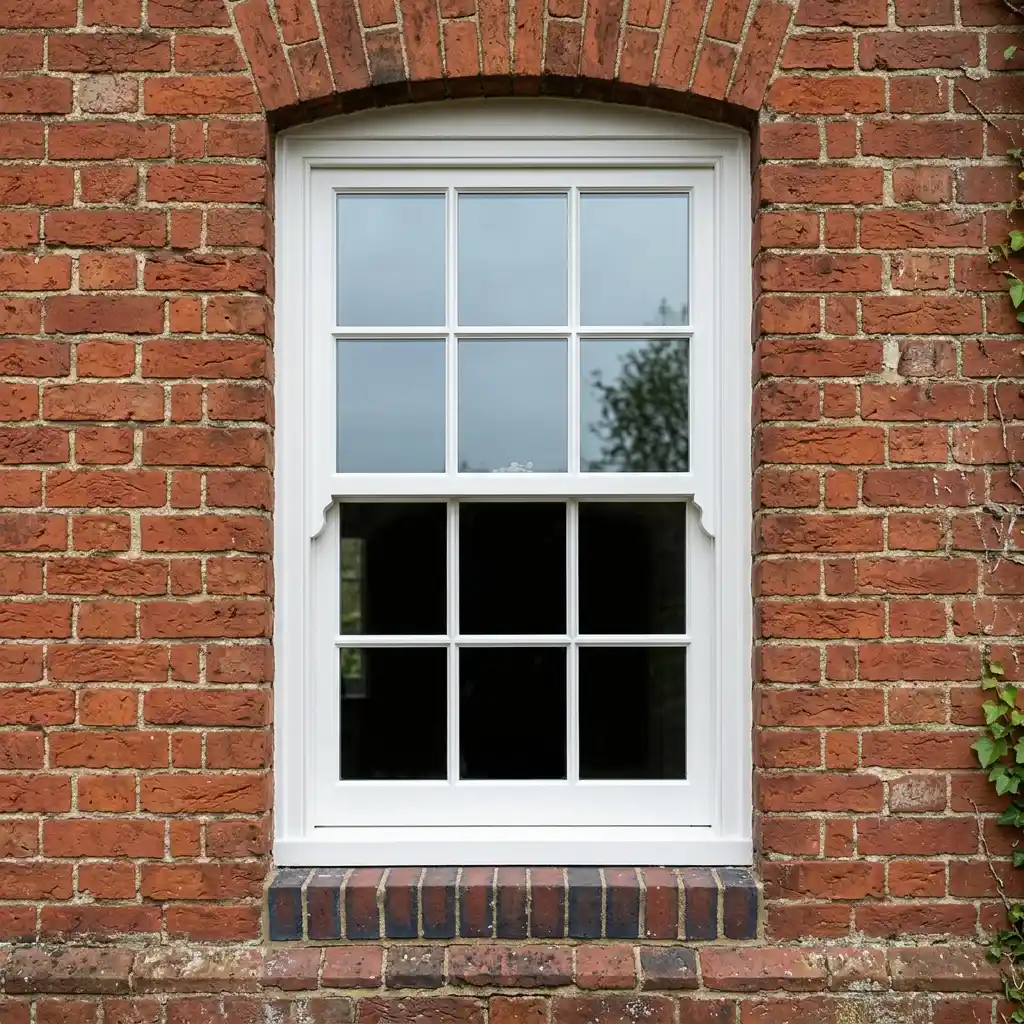
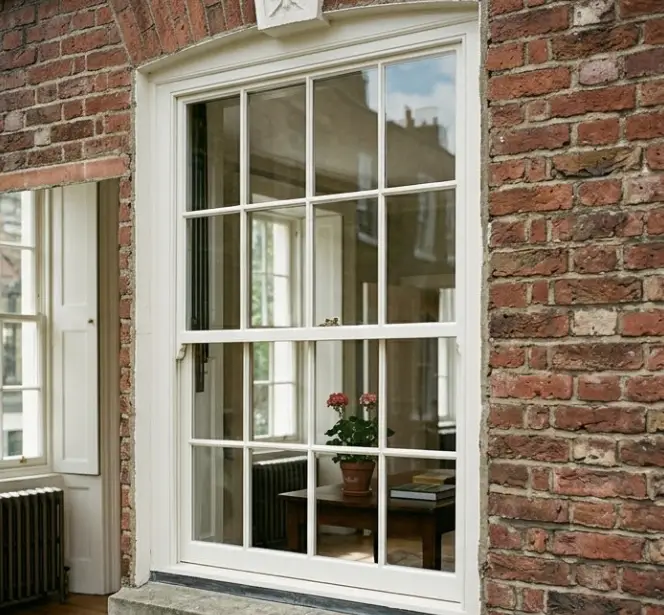
Early glass manufacturing could only produce relatively small, thin sheets of crown glass. To glaze a large window opening, joiners had to piece together multiple small panes using thick, hand-carved wooden glazing bars. The typical Georgian layout is the classic "six-over-six" pattern, creating a grid of twelve small panes on a double-hung window.
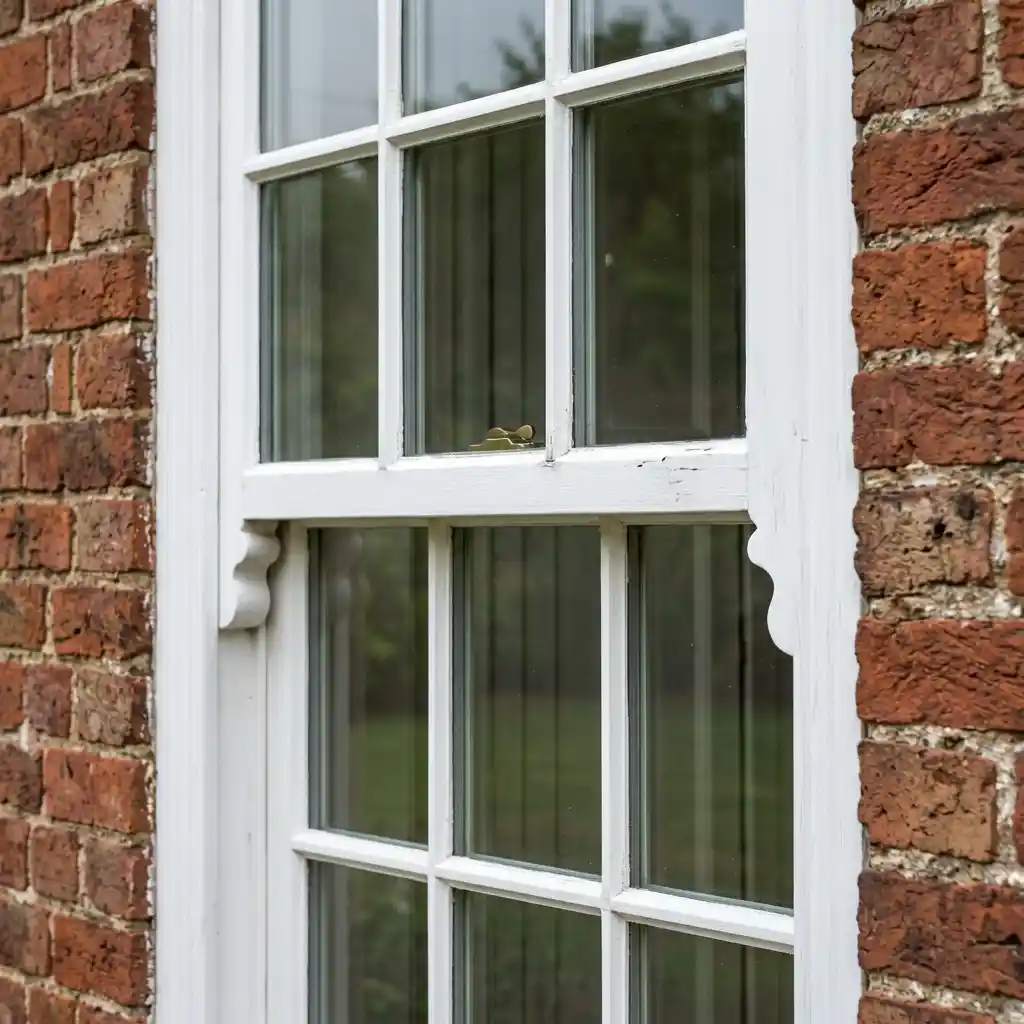
By the mid-19th century, sheet glass manufacturing allowed for much larger, heavier panes. Homeowners wanted brighter interiors, leading to the popular "two-over-two" configuration. Because these larger panes were significantly heavier, joiners started carving decorative "sash horns" at the bottom of the top sash to prevent the joints from pulling apart.
The Edwardian period combined the best of both worlds. It became fashionable to have a decorative, multi-pane upper sash (often a "six-over-one" or "six-over-two" design) containing smaller coloured or textured glass panes, paired with a single, large sheet of clear glass in the bottom sash to maximise light.
Living in a London conservation area or a listed property usually means you are required to keep traditional timber frames. However, that doesn't mean you have to tolerate drafty rooms or high heating bills. The internal components and glass can actually be upgraded to meet modern thermal standards without losing the window's classic character.
For example, we frequently retrofit gas-filled slimline double glazing into original timber sash profiles. Because these units are incredibly thin, they maintain a narrow sightline that looks identical to single-glazed panes from the street, but they offer vastly superior insulation.
If a property is a newer build or has narrow masonry openings where there isn't room inside the brickwork for weight pockets, we tend to use spring balances instead. These rely on internal tension springs hidden in the frame to support the sash's weight, doing away with the need for traditional cast weights and cords.
Even if you decide to keep your existing glass, proper draft-proofing makes a world of difference. We rout discrete brush seals directly into the staff beads, parting beads, and meeting rails. This shuts out cold drafts, stops the sashes from rattling in the wind, and noticeably improves overall energy efficiency while leaving the historic look completely untouched.
The word "sash" is derived from the French word "châssis," meaning frame. It refers specifically to the frame that holds the glass, which moves within the larger window unit.
No. A sash window's sashes slide vertically past each other within a box frame — they don't swing open on hinges. Windows that open outward or inward on hinges are casement windows. Some people use "hinged sash" loosely to describe a casement, but true sash windows have no hinges at all.
The main parts are the sashes (the moving glazed frames), the box frame (the fixed outer casing), the sash cord and weights (the counterbalance system), the parting bead (which separates the two sashes), and on many Victorian and Edwardian windows, decorative sash horns at the base of the upper sash.
With modern high-quality paints and timber like Accoya®, sash windows only require repainting every 8-10 years. Regular cleaning and pulley lubrication will keep them gliding for decades.
Yes — we specialise in period property and listed building window repairs. Work on listed buildings requires like-for-like repair rather than replacement in most cases. We use traditional methods and materials that meet conservation area requirements.
In most cases, repairing original timber sash windows is better value and more sustainable than replacement — especially for period properties. Restoration preserves the character of the building and is often significantly cheaper.
Yes — we fit slim-profile double-glazed units into timber sash windows. Our double glazing for sash windows retains the traditional appearance while dramatically improving thermal and acoustic performance.
Whether you need a sash window repair, full replacement, or heritage restoration — get in touch for honest advice and a free, no-obligation quote.
218 Hornsey Road, London, N7 7LL
Fill in the form and we'll get back to you within one business day — usually much sooner.
