
Menu
London's trusted window installation service — call us for a free site survey.

Get a quote
If you live in an older property anywhere in London, those big sliding timber frames are probably half the reason you bought the place. Learn how to maintain their period character while improving comfort and insulation.


No obligation · Free site survey · Reply within hours




I spend every single day climbing up scaffolding and leaning out of windows across the capital, so I know exactly how frustrating old timber frames can be. After taking a beating from the rain for a hundred years, they swell up, get stuck, let freezing drafts blow across the living room, and make an absolute racket when a bus drives past. People always ask me what they should do with them, which is exactly why I put together this guide to sash window repair, restoration, and replacement.
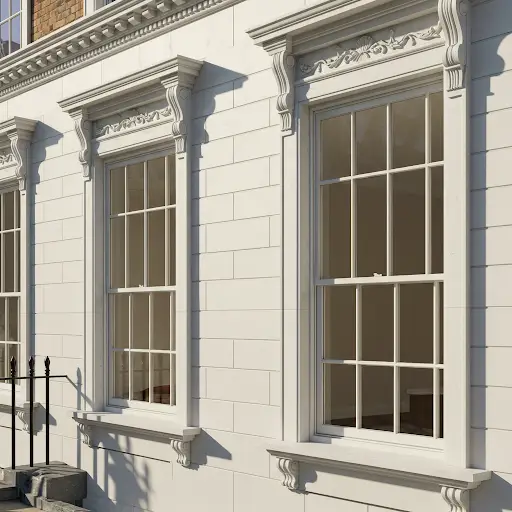
You can't just rip historic frames out and stick cheap plastic in there—especially not in a Conservation Area. You have to figure out what's actually broken, what can be salvaged, and when the timber is just too far gone. In this complete guide, we're going to break down exactly how we tackle the rotting wood, the snapped cords, and the drafts.
Don't automatically assume your frames are ruined just because they look a bit rough. I'd say nine times out of ten, we can actually save the original timber without charging you for a completely new window. A proper repair job just gets rid of the annoying stuff, like the draft whistling through the gap or the sash slamming down on your hand. You can read a bit more about the specific sash window repair London jobs we do.
If you want to stop burning money on heating, fixing the gaps is job number one.
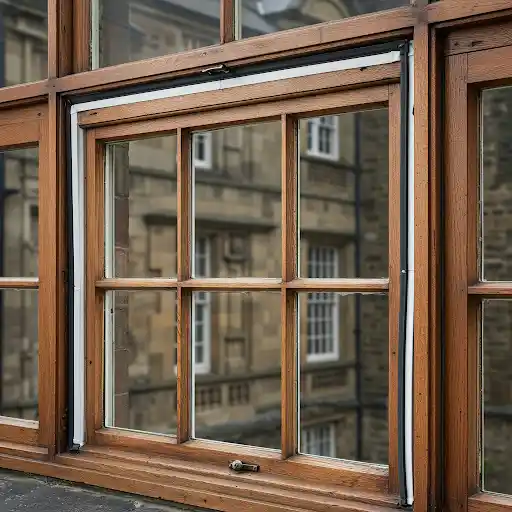
Instead of using sticky foam strips that fall off after a month, we actually machine a tiny groove straight into your timber beads. We slot tough brush seals directly into the wood. It completely blocks the wind from getting in, and you can't even see the seals when the window is shut. It instantly stops the glass rattling at night too.
When a window feels like dragging a boulder up a hill, or immediately crashes down like a guillotine, it means the internal weight system is broken.
We pop the box frame open, dig out the broken old ropes, and tie in brand new, heavy-duty waxed cotton cords. While the box is open, we always clean up the brass pulleys so the whole thing glides smoothly up and down.
I can't count the number of times I've walked into a house where someone has literally glued the window shut with ten layers of cheap gloss paint.
We take a sharp blade and cut right through the paint buildup, sand the timber runners down to bare wood, and add fresh wax. Suddenly, a window that hasn't opened since 1985 slides up with two fingers.
If a pane has cracked or someone threw a ball through it, we don't need to replace the whole timber frame. We just chop out the rock-hard old putty, drop in a fresh pane of float glass or a slimline double-glazing unit, and seal it back up tightly by hand with fresh linseed oil putty.
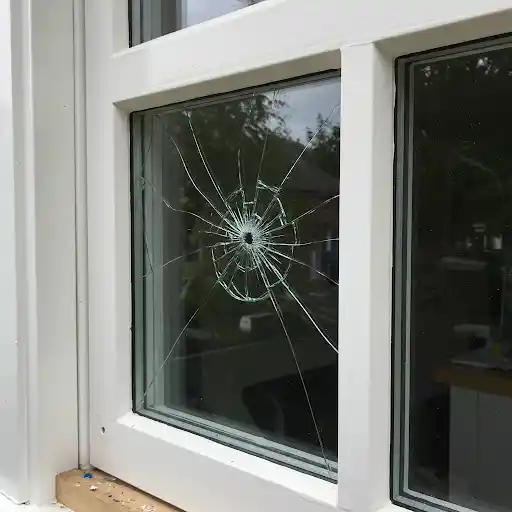
Sometimes a quick fix isn't enough. When a window has deep rot eating through the bottom rails, we have to tear the whole thing down to its bare bones to save it.
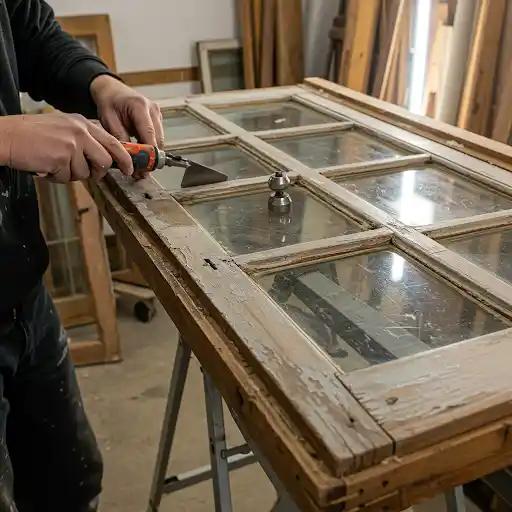
If you're in a Listed Building, you normally aren't allowed to rip the frames out anyway. We have to preserve them. If the bottom sill is turning to mush but the sides are completely fine, we just chop out the rotten bit and splice in a massive chunk of fresh, treated timber. Once we sand it down and prime it, you literally can't tell where the old wood ends and the new wood begins.
The price of this really depends on how bad the rot is. Obviously, splicing a tiny corner takes an hour, but rebuilding half a rotten frame on the third floor from scaffolding is going to cost more.
When the lads turn up, we strip the window right back. We dig out the rot, splice in new timber, clean up the brass, tie new cords, and re-glaze anything that's broken. We always finish it off properly with premium primer and weather-resistant topcoats so the damp can't get back in. When we pack up our tools, your window looks completely original, but it glides open perfectly and seals out the wind completely.
A traditional box frame isn't like a modern uPVC window on cheap metal hinges. It's actually a pretty clever hollow timber box hiding heavy lead weights on pulleys that balance out the heavy glass sliding panels. If any part of that system breaks, the window either jams or drops.
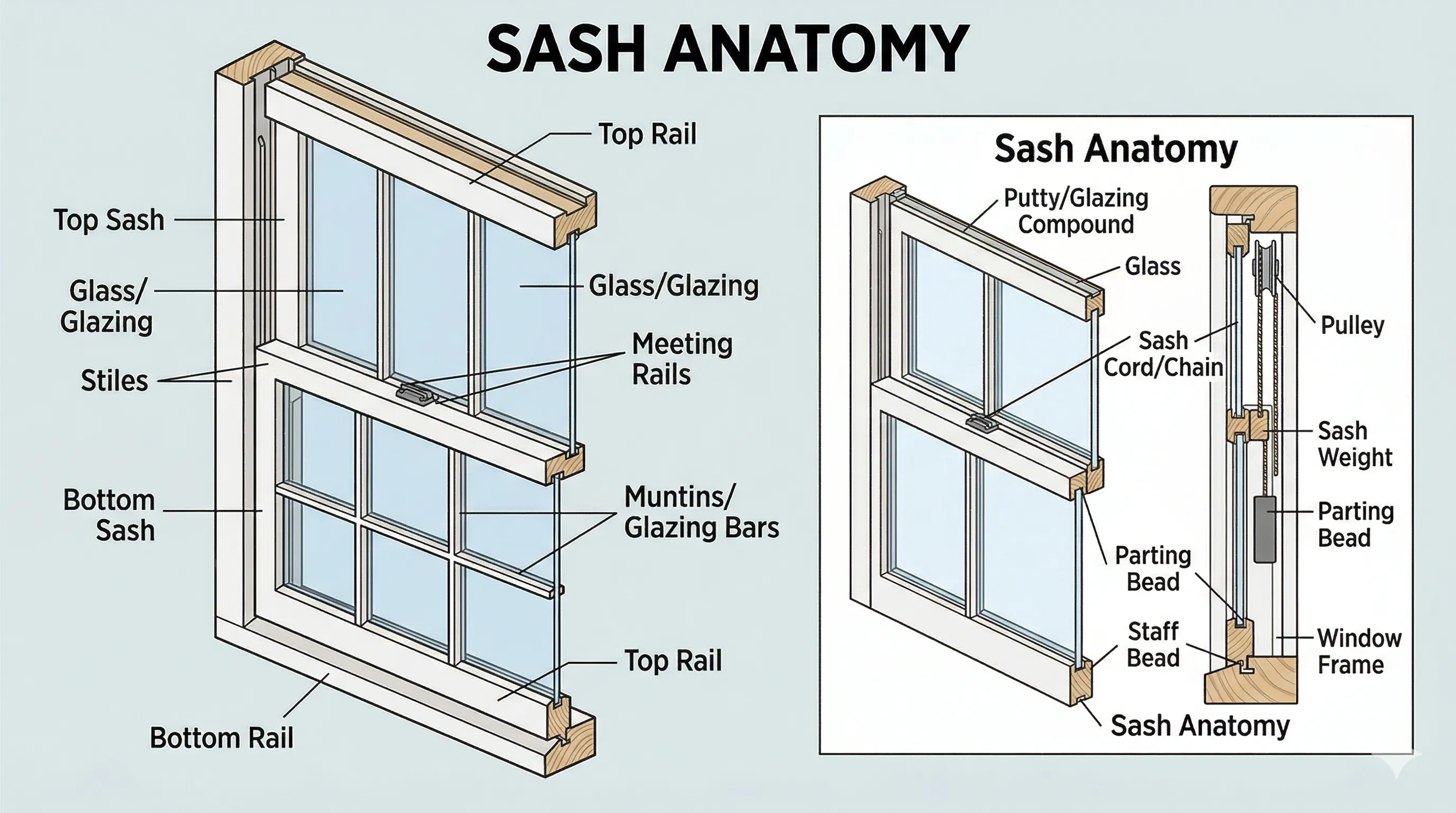
Diagram of the hollow box frame and weight system we deal with every day.
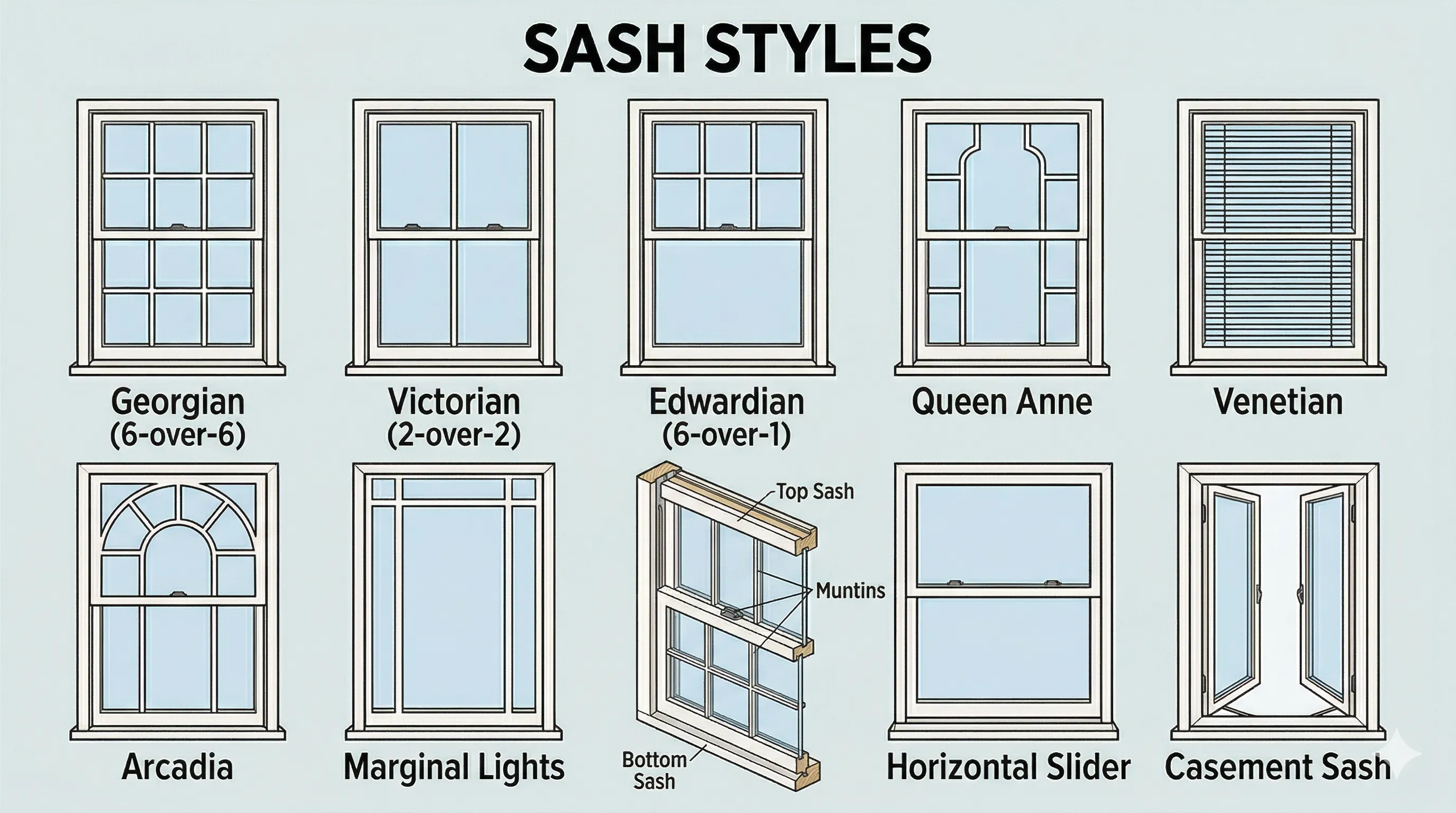
If you live in a Georgian place, your windows probably have lots of tiny glass squares split up by incredibly thin timber bars. Victorians figured out how to make bigger sheets of glass, so they usually just have one vertical bar down the middle, along with little decorative 'horns' on the outside corners. Edwardian houses got even fancier, usually throwing multiple small squares on the top half and leaving a single massive pane of glass on the bottom half.
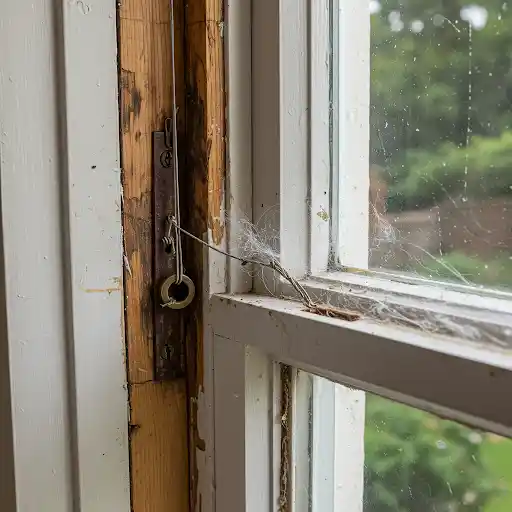
I see the exact same problems on nearly every street. Someone ignores a tiny patch of peeling paint on the outside sill. The rain gets in, the timber acts like a sponge, and a few winters later, you can push a screwdriver straight through the wood.
If you just catch the rot early, you save yourself an absolute fortune.
I hate throwing away original joinery, but sometimes a frame is completely unsalvageable. If the whole box is totally rotten from top to bottom, patching it up is pointless. A big part of writing this Guide is making sure people know when to cut their losses. We just rip the entire thing out and build a completely new timber window in our workshop.
We make sure the new frame perfectly matches the exact historic profile of your original one so the council stays happy, but we stick modern double glazing inside it so you stay warm. Alternatively, if your outer box is actually fine but the sliding parts are shot, we'll just build new moving sashes and drop them into your old frame. It's a lot cheaper and stops us from ruining your interior plasterwork.
Whether you need a sash window repair, full replacement, or heritage restoration — get in touch for honest advice and a free, no-obligation quote.
218 Hornsey Road, London, N7 7LL
Fill in the form and we'll get back to you within one business day — usually much sooner.
