
Menu
London's trusted window installation service — call us for a free site survey.

Get a quote
Restore your home's heritage with architecturally correct sash windows. From authentic glazing bars to slimline double glazing, we preserve period charm across London.

No obligation · Free site survey · Reply within hours





As Heritage Sash Windows London specialists, we know that Architecture is a balance of mathematics and art. When it comes to period properties, replacing a sash window with one that is "near enough" loses the soul of the house.
As Heritage Sash Windows London specialists, we know that Golden Ratio Sash Windows & Doors is a specialist in Heritage Sash Window Restoration, ensuring every project meets strict architectural and conservation standards.
As Heritage Sash Windows London specialists, we know that When it comes to period properties—whether Georgian, Victorian, or Edwardian—the windows are the "eyes" of the building. A poorly proportioned replacement window drastically alters the entire aesthetic of the facade.
An architecturally correct window respects the specific era of your home. We focus on three critical elements that mass-produced windows consistently get wrong:
Mass-produced bars are often too thick. We use authentic 18mm or 22mm profiles that match the original "putty line" look, ensuring delicate and historically accurate sightlines.
Modern sashes have chunky 50mm+ rails. Our heritage meeting rails are exceptionally slim, preserving the original elegant proportions of the period.
These decorative lugs are hallmarks of Victorian design. We hand-carve them to perfectly match your property's specific original pattern, rather than using generic stick-on mouldings.
If your frames are structurally sound but lack these details, our workshop can perform specialist sash window repairs to restore their original character.
Architectural integrity shouldn't mean a cold house. We utilize Accoya® timber for unmatched stability and Slimline Heritage Double Glazing.
Our slimline units are so thin they fit perfectly into traditional timber rebates, providing modern energy efficiency without the bulky "double reflection" look.
This technology is essential for meeting heritage and conservation requirements in London, allowing for high performance within Grade II limitations.
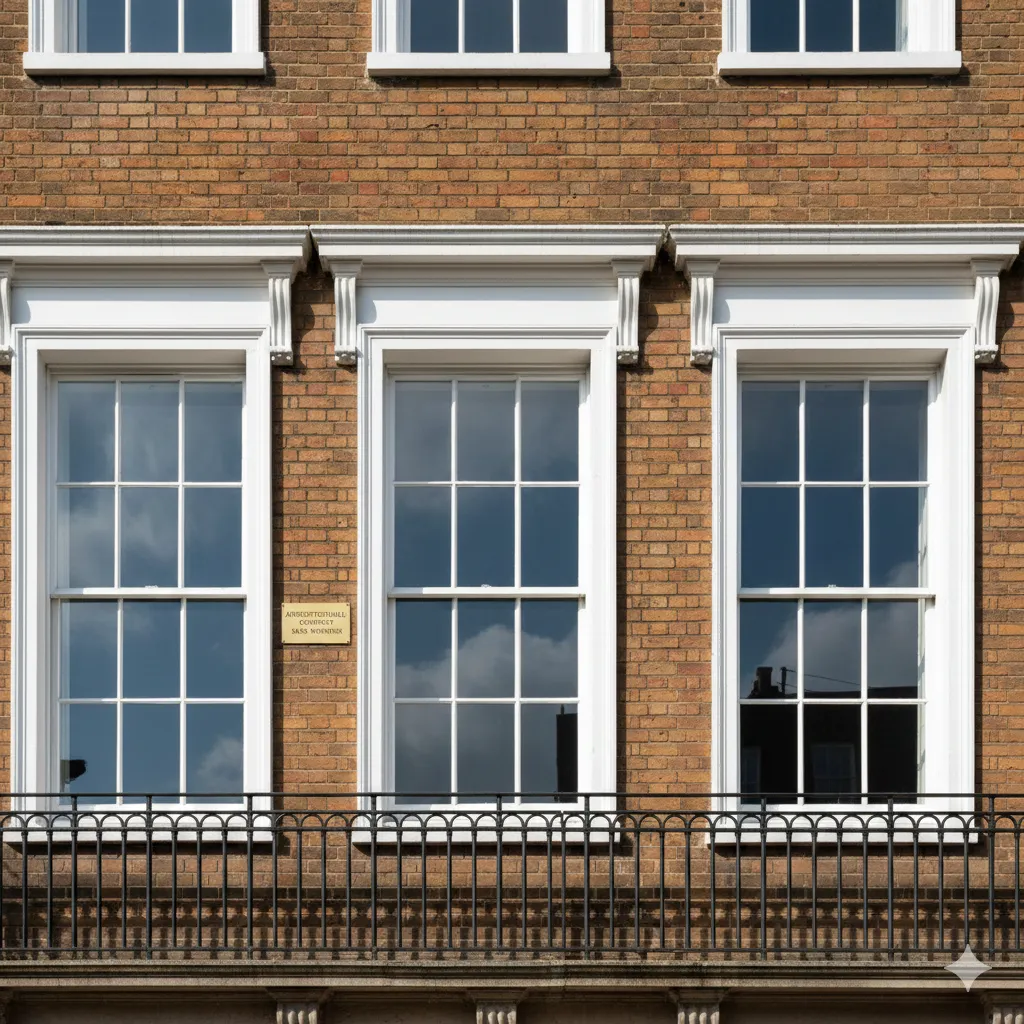
Non-authentic windows can actually decrease your home's market value. Surveyors and period-home buyers look specifically for original architectural features.
Request a Heritage Consultation →It means the window adheres to the exact proportions, moulding profiles, and joinery techniques of its specific era (Georgian, Victorian, or Edwardian). This includes the slimness of the meeting rail, the specific curvature of the sash horns, and the use of traditional timber finishes.
In Conservation Areas or Listed Buildings, yes. However, opting for architecturally correct timber windows significantly increases your chances of approval, as they are seen as a restoration of the building's character rather than an alteration.
Ensure your property retains its true character. Get in touch for expert advice and a free, no-obligation survey.
218 Hornsey Road, London, N7 7LL
Fill in the form and we'll get back to you within one business day — usually much sooner.
