

Expert Guide: Sash Windows in London Conservation Areas 2026
All you need to know about Sash Windows in London Conservation Areas
Can I upgrade sash windows in a London Conservation Area?
Yes. In 2026, most London councils (including Westminster and Camden) permit window upgrades if they preserve the architectural fabric. While "like-for-like" timber repair is favored, vacuum glazing (FINEO) and slimline double glazing are now widely accepted solutions for meeting modern thermal regulations while satisfying Article 4 Directions.
Accoya® Timber (FSC Certified)
6.7mm Vacuum or 12mm Slim
FENSA & Heritage Compliant
When working within heritage restrictions, understanding how to identify sash window types is the first step in ensuring your restoration meets local planning guidelines.
London is defined by its architectural heritage. From the stuccoed terraces of Kensington to the Georgian squares of Islington, the traditional timber sash window is the “eyes” of the city’s historic buildings. However, for homeowners living in one of London’s 1,000+ conservation areas, maintaining or replacing these windows is not just a home improvement project—it is a matter of legal compliance and heritage preservation.
If you are looking for high-quality sash windows in London and live in a protected conservation area, this guide provides the definitive answers on regulations, planning permission, and modern energy-efficient solutions.
Are you in a London Conservation Area?
Don't guess with heritage compliance. Use the official 2026 London Planning Map to verify your property status and Article 4 Directions.
Find My Conservation Area →*Search by your postcode on the London.gov portal to identify local authority restrictions.
Sash Windows in London Conservation Areas
A conservation area is an area of “special architectural or historic interest,” the character or appearance of which it is desirable to preserve or enhance.
In London, local councils (such as Camden, Westminster, or Richmond) have the power to designate these areas. Once designated, the “Permitted Development” rights that allow most homeowners to change windows without permission are often restricted.
How do I know if I’m in a Conservation Area?
Most London boroughs provide interactive maps on their planning portals. It is vital to check this before commissioning any joinery, as unauthorized changes to a property in a conservation area can lead to enforcement notices and a requirement to undo the work at your own expense.
The Planning Maze: Permission vs. Notification
The most common question Londoners ask is: “Do I need planning permission to replace my sash windows?“
The answer depends on two factors: the property type and the presence of an Article 4 Direction.
Under standard UK planning law, you can usually replace windows in a house in a conservation area without planning permission, provided the replacements are a “like-for-like” match. This means:
-
- Same materials (usually timber).
-
- Same opening mechanism (sliding sash).
-
- Same glazing bar profile and width.
-
- Same color and finish.
Flats and Maisonettes
Unlike houses, flats do not enjoy “Permitted Development” rights. If you own a flat in a Victorian conversion in Hackney or a purpose-built block in Chelsea, you must apply for planning permission for any window replacement, even if you are using timber.
The "Article 4 Direction"
Some of London’s most sensitive areas (like the Dulwich Estate or parts of Hampstead) are subject to an Article 4 Direction. This is a specific legal tool used by councils to remove Permitted Development rights from houses. If your street is under Article 4, you will need planning permission for any change to the front elevation, including “like-for-like” window replacements.
The Double Glazing Dilemma
Historically, conservation officers in London were strictly against double glazing, fearing that the “double reflection” and the thickness of the units would ruin the slender profiles of traditional sashes.
However, in response to the climate crisis and rising energy bills, London planning policy is evolving.
The Solution: Slimline and Vacuum Glazing
To “beat” the strict regulations of boroughs like Kensington & Chelsea or Westminster, we now utilize two primary technologies:
Slimline Double Glazing: Units as thin as 11mm or 12mm with gas-filled cavities (Krypton or Xenon) that fit into traditional 20mm glazing bars.
Vacuum Glazing (FINEO): The “holy grail” of sash window replacement. Vacuum glazing is as thin as a single pane of glass (6.7mm) but offers the thermal performance of triple glazing. Because it lacks the “spacer bar” look of double glazing, it is increasingly approved by London conservation officers.
Glazing Comparison: Heritage Aesthetics vs. 2026 Thermal Standards
| Feature | Single Glazing | Slimline Double | Vacuum Glazing (FINEO) |
|---|---|---|---|
| Thickness | 3mm - 4mm | 11mm - 14mm | 6.7mm - 7.7mm |
| U-Value (Heat Loss) | 5.8 (Poor) | 1.2 - 1.9 (Good) | 0.7 (Elite) |
| Conservation Fit | Original Standard | Requires Deep Rebate | Fits Original Sashes |
Why Timber Matters: Accoya vs. Hardwood
When replacing sash windows in London, material choice is the difference between a 10-year lifespan and a 60-year lifespan.
Softwood: Traditional but prone to rot if not meticulously painted every 3–5 years.
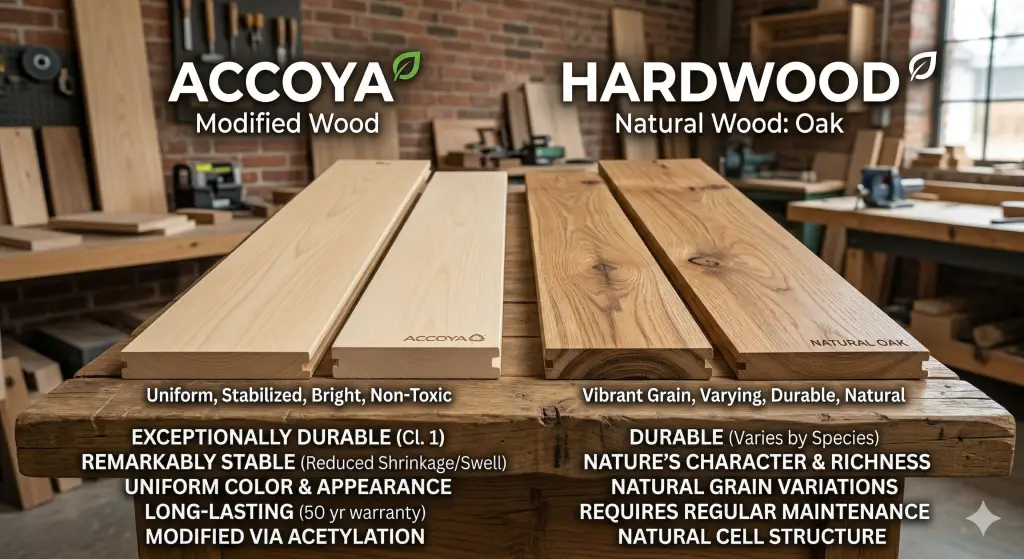
Hardwood (Sapele/Oak): Durable and dense, but can sometimes “bleed” tannins through white paint.
Accoya Timber: The gold standard for London properties. Accoya is a chemically modified wood that does not swell, shrink, or rot. It provides a stable base for paint, meaning your windows may only need repainting every 10–12 years.
Restoration vs. Replacement
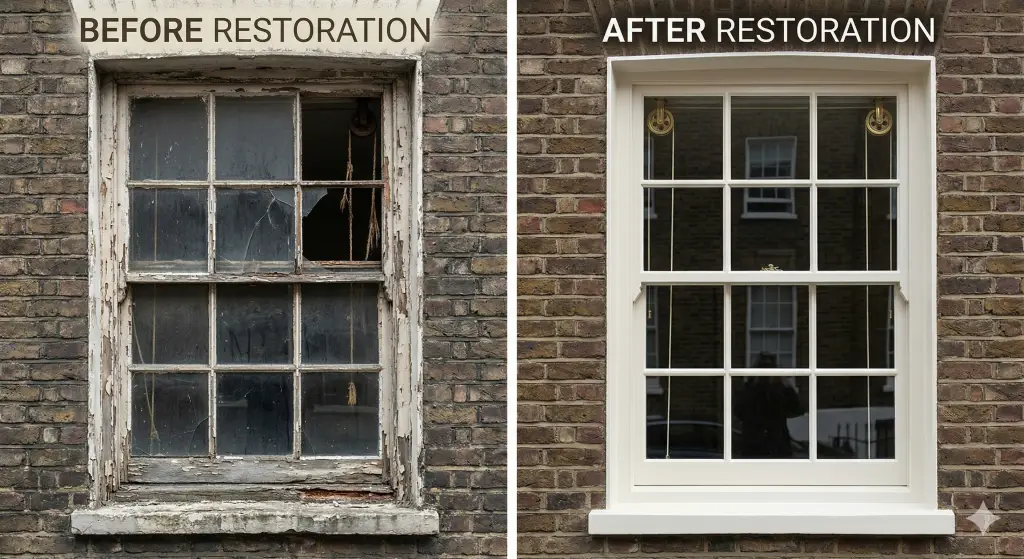
Before opting for full replacement, consider Sash Window Restoration. Many original London sashes (pre-1900) were made from “slow-grown” Baltic pine, which is often higher quality than modern timber.
Restoration typically involves:
Draught-proofing: Installing discrete brush strips into the staff beads and parting beads.
Overhauling: Replacing cords, pulleys, and weights to ensure smooth operation.
Egress and Safety: Ensuring the windows can act as a fire escape where necessary.
5 Steps to Replacing Windows in a London Conservation Area
Identify your status: Check your borough’s planning portal for Conservation Area status and Article 4 Directions.
Consult a specialist: Use a joiner who understands London-specific heritage requirements.
Request a “Method Statement”: If applying for permission, you will need detailed CAD drawings of the window sections (meeting rails, sash horns, and glazing bars).
Consider the neighbors: Planning officers look for “consistency” in the street scene. If your neighbors have successfully installed slimline double glazing, you have a strong precedent.
Fensa Certification: Ensure your installer is Fensa or Certass registered to guarantee the work meets building regulations for thermal heat loss (U-Values).
Conclusion: Preserving the London Skyline

Replacing or repairing sash windows in a conservation area is a balancing act between 21st-century comfort and 19th-century aesthetics. By choosing high-performance timber like Accoya and ultra-thin glazing solutions like Fineo, London homeowners can significantly reduce their carbon footprint while adding significant value to their heritage assets.
Are you planning a sash window project in London? Always start with a professional survey to determine if restoration or replacement is the most cost-effective and compliant path forward for your home.
Compliance Standards
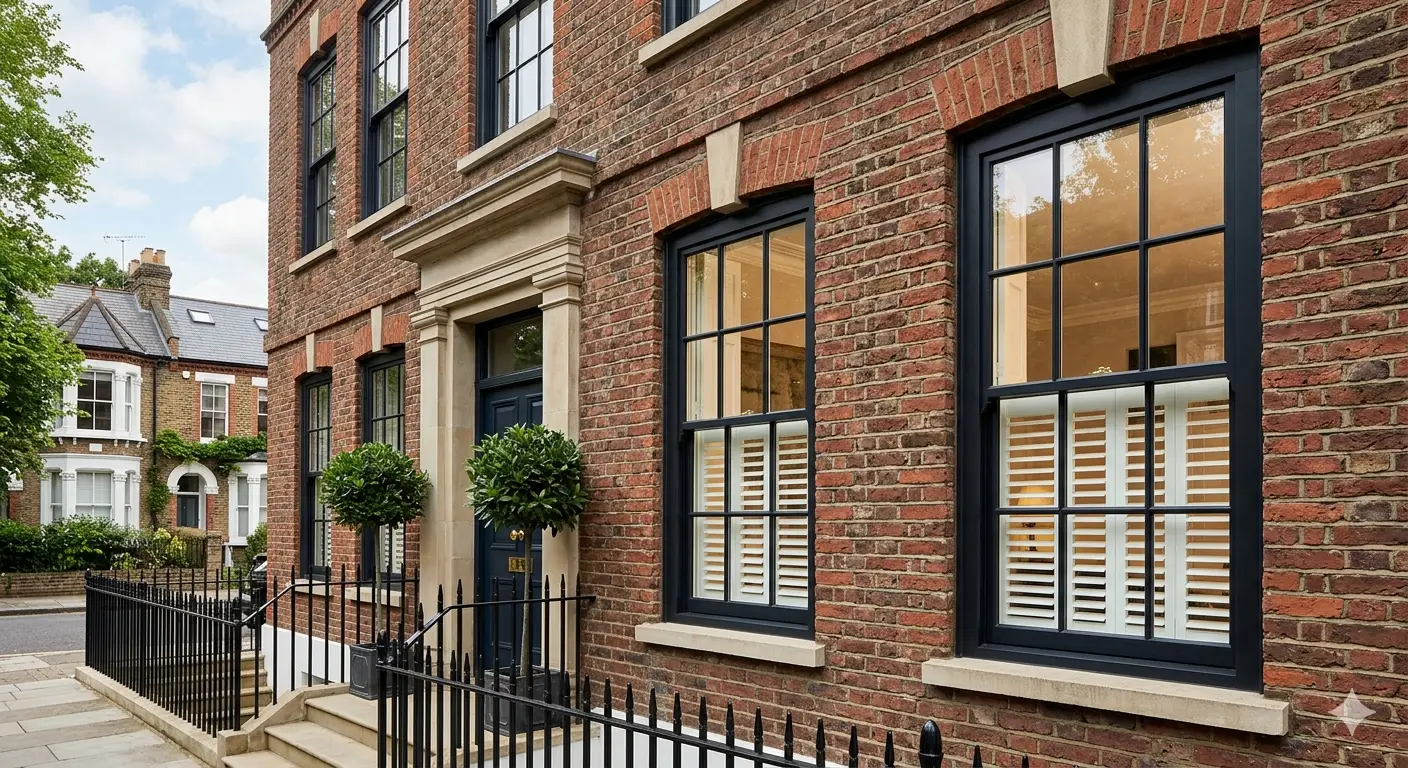
The Accoya® Advantage: Engineered for London
Accoya® isn't just wood; it's a non-toxic, acetylated timber that sets the benchmark for conservation-grade sash windows.
- ✔ 50-Year Warranty: Guaranteed against rot for half a century above ground.
- ✔ Unrivaled Stability: 75% less swelling and shrinkage than standard hardwoods—paints stay pristine longer.
- ✔ Carbon Neutral: Fully sustainable, meeting the strict ESG requirements of 2026 London planning.
Specialist Joinery Services Across London
Serving Conservation Areas in: Kensington & Chelsea | Westminster | Camden | Islington | Richmond | Hackney
Check your borough's Article 4 status →