
Menu
London's trusted window installation service — call us for a free site survey.

Get a quote
Why some sash windows have a curved timber "horn" at the corner and others don't — and what it tells you about your property's age.

No obligation · Free site survey · Reply within hours





The curved timber detail that tells you whether your sash windows are Georgian, Victorian or Edwardian — and why it matters for restoration and replacement.
Restoring a period sash window? Golden Ratio specialises in Professional Sash Window Restoration across London.
Look closely at the top corners of a traditional sash window and you'll often spot a small curved piece of timber projecting past the meeting rail, down into the box frame. This is a sash horn — a detail that seems purely decorative but was actually born out of structural necessity. Whether your windows have horns or not is one of the clearest visual clues to when your property was built, and getting it right matters if you're restoring or replacing sashes on a period home.
A sash horn is the curved timber extension below the bottom rail of the upper (outer) sash, projecting downward past the meeting rail into the pulley stile. Many Victorian and Edwardian sashes also have a matching horn on the top rail of the lower sash. Rather than a separate part, the horn is cut from the same piece of timber as the rail — it's a joinery detail, not something bolted on afterwards.
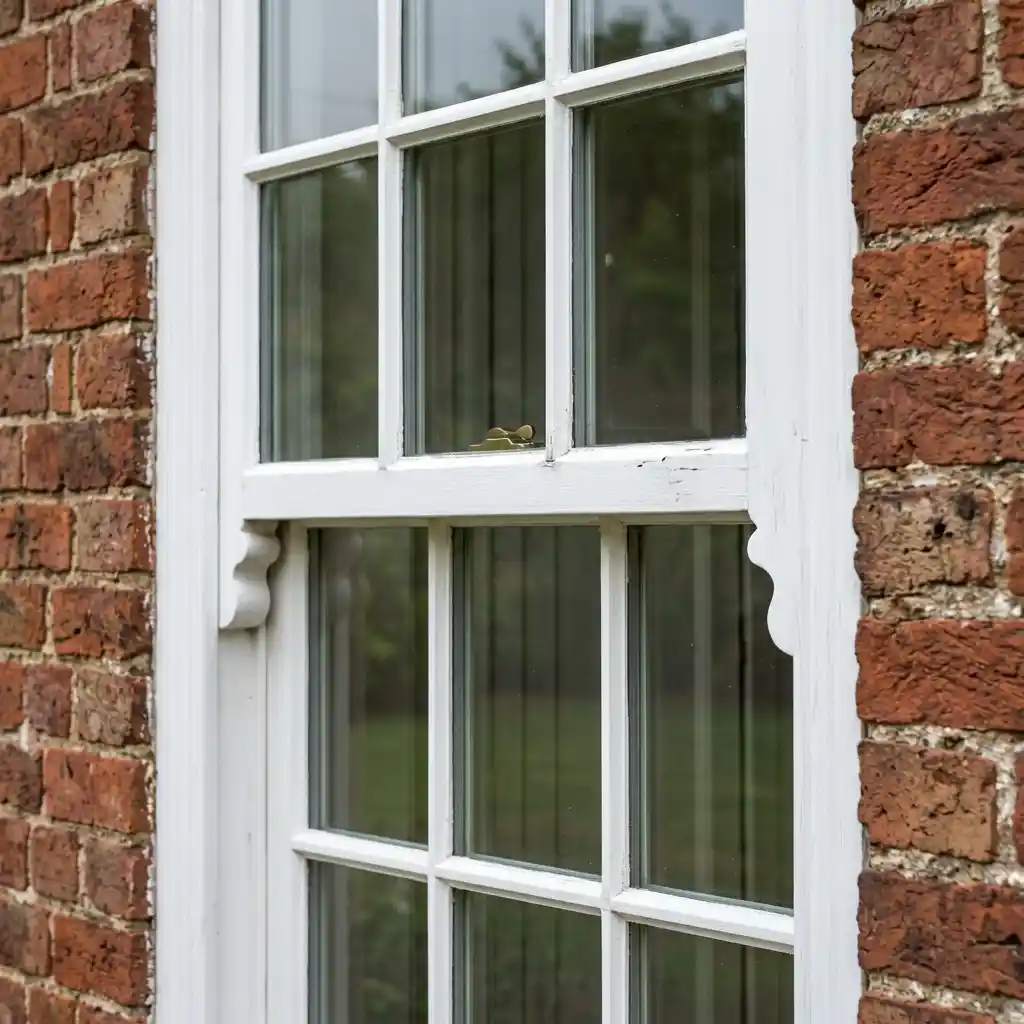
Its job is to reinforce the mortise-and-tenon joint at the corner of the sash, exactly where the frame is under the most stress from the weight of the glass and the pull of the sash cords running through the weight-and-pulley mechanism.
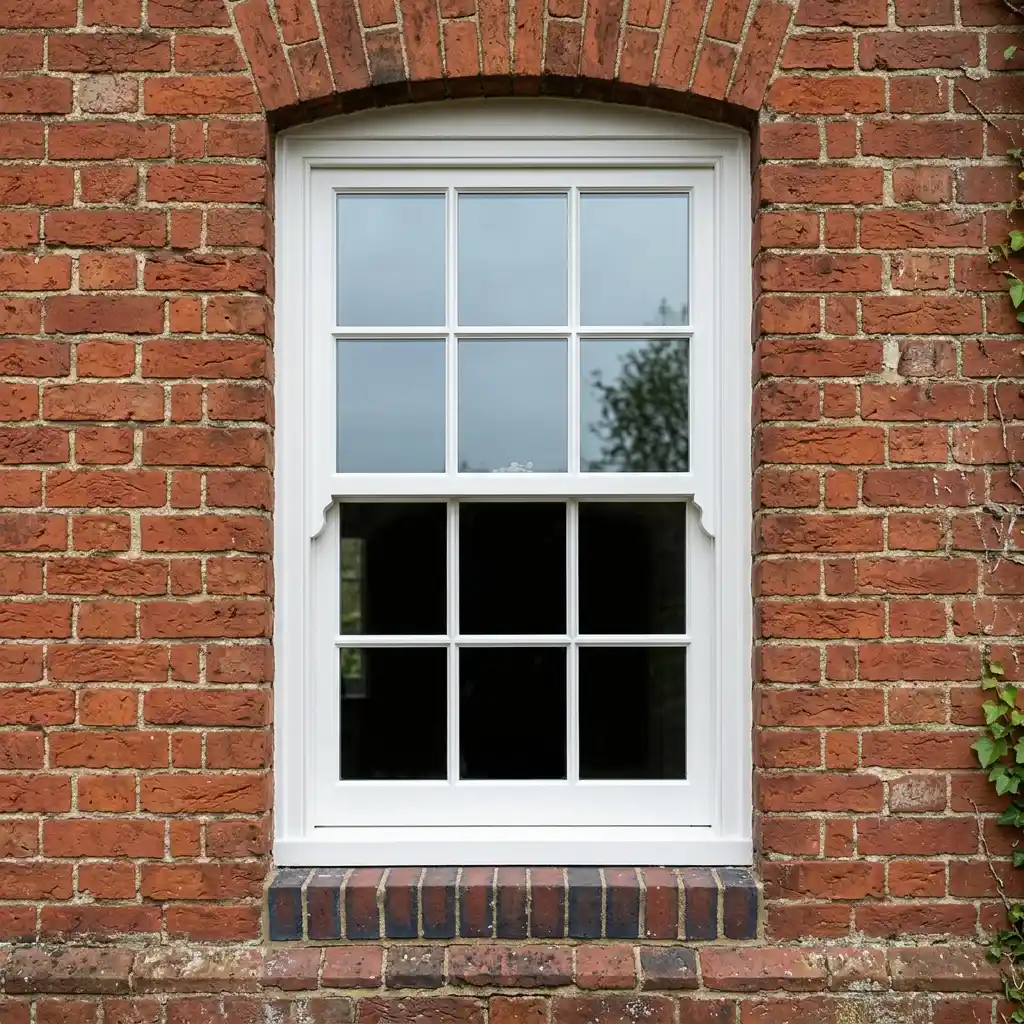
Georgian sash windows (roughly 1714–1830) are almost always horn-less. Glass could only be made in small panes at the time, so Georgian sashes used a grid of slim horizontal and vertical glazing bars — typically the classic six-over-six arrangement. That grid of bars braced the whole sash like a lattice, so the corner joints were well supported and a horn simply wasn't needed.
As glass manufacturing improved through the 19th century, larger panes became affordable and fashionable. Victorian sashes moved to fewer, bigger panes — often the two-over-two layout — with the horizontal glazing bars removed altogether. That made each sash heavier and removed the bracing the old glazing-bar grid provided, leaving the corner joint more vulnerable to racking and splitting. Joiners responded by extending the rail into a horn at the corner, strengthening exactly the point that had lost its support.
By the time Edwardian sashes arrived, with their six-over-two panes, horns were standard practice. Here's how that breaks down by period.
Georgian sashes used a grid of slim glazing bars holding small panes — typically the classic six-over-six layout. That grid braced the whole sash like a lattice, so the corner joints were well supported and a horn simply wasn't needed. Horn-less with lots of small panes almost always means Georgian.
As glass manufacturing improved, Victorian sashes moved to fewer, larger panes — often two-over-two — with the bracing glazing bars removed. That made each sash heavier and left the corner joint more vulnerable, so joiners extended the rail into a horn to reinforce it. Horns plus larger panes are the clearest sign of a Victorian sash.
Edwardian sashes combined a decorative multi-pane upper sash (often six-over-two) with a single large pane below, and kept the horn as standard practice by this point. It's a useful rule of thumb rather than an exact science — plenty of transitional properties borrow details from both eras.
Not universally. Early Victorian properties built before horns became common practice can still be horn-less, and some smaller, plainer properties kept simpler horn-less sashes even as the style spread elsewhere. It's the pane size and glazing bar arrangement, more than the date alone, that determines whether a horn was structurally needed — which is why matching your specific property is more reliable than going by decade alone.
Getting the horn detail wrong is a surprisingly common mistake. We regularly see Georgian-era properties fitted with horned replacement sashes (or vice versa) by installers who didn't check the original design first — an easy way to make an otherwise good-quality window look subtly out of place. It matters even more in a conservation area or on a listed building, where planning officers routinely check horn details against the property's period as part of assessing whether a replacement is "like-for-like."
There's also a quality issue worth knowing about: some budget uPVC and composite sash replacements use a "mock horn" — a decorative piece glued or screwed onto the outside of the frame rather than a genuine structural extension of the rail. It can look convincing from the street, but it isn't doing the job a real horn does. When we build or restore timber sash windows, horns are cut as a proper joinery detail from solid Accoya or timber, correctly proportioned to match your property's period.
If a sash has lost its horn to rot, a poor past repair, or an incorrect non-original replacement, it can usually be reinstated as part of a full sash window restoration. We take a profile from a surviving original sash on the property (or a matching neighbouring property) wherever possible, so the replacement horn matches the rest of the terrace or the building's original design exactly.
A sash horn is the curved timber extension below the bottom rail of the upper sash (and often the top rail of the lower sash) that projects past the meeting rail. It reinforces the corner joint and is a defining feature of Victorian and Edwardian sash windows.
Georgian sashes used a grid of glazing bars holding small panes, which braced the whole frame. Victorian sashes moved to fewer, larger panes with the bracing bars removed, making the corner joint weaker — so horns were added to reinforce it. Georgian sashes generally don't need them.
Not always — it depends on your property's age and style. A Georgian-style property should usually be replaced without horns, while a Victorian or Edwardian property should usually keep them. In a conservation area or on a listed building, matching the correct horn detail is often a planning requirement.
Yes. If a window has lost its horns to rot or a previous poor-quality replacement, we can reinstate correctly proportioned horns as part of a restoration, cut as a genuine joinery detail rather than a decorative add-on, so the finished window matches your property's period.
Get in touch for honest advice on matching your property's period — and a free, no-obligation quote for restoration or replacement.
218 Hornsey Road, London, N7 7LL
Fill in the form and we'll get back to you within one business day — usually much sooner.
