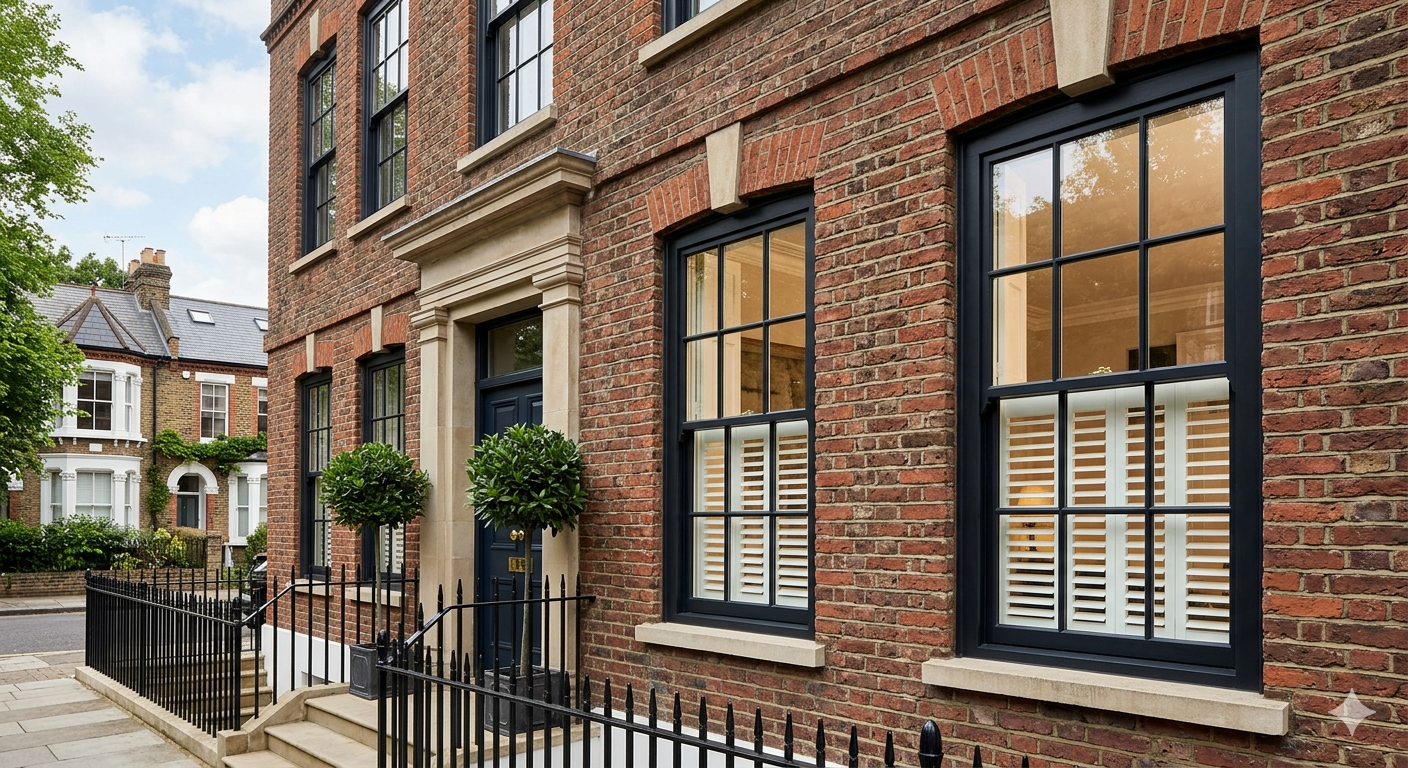
If you live in a period property, understanding your architectural heritage starts with your glazing. Many clients ask us how to identify sash window types when considering restoration or draught-proofing. In the UK, the “sash” refers to the moveable panel of the window, but the mechanism and the era of the design vary significantly across window types UK wide.
Identifying the Mechanism: Single vs. Double Hung
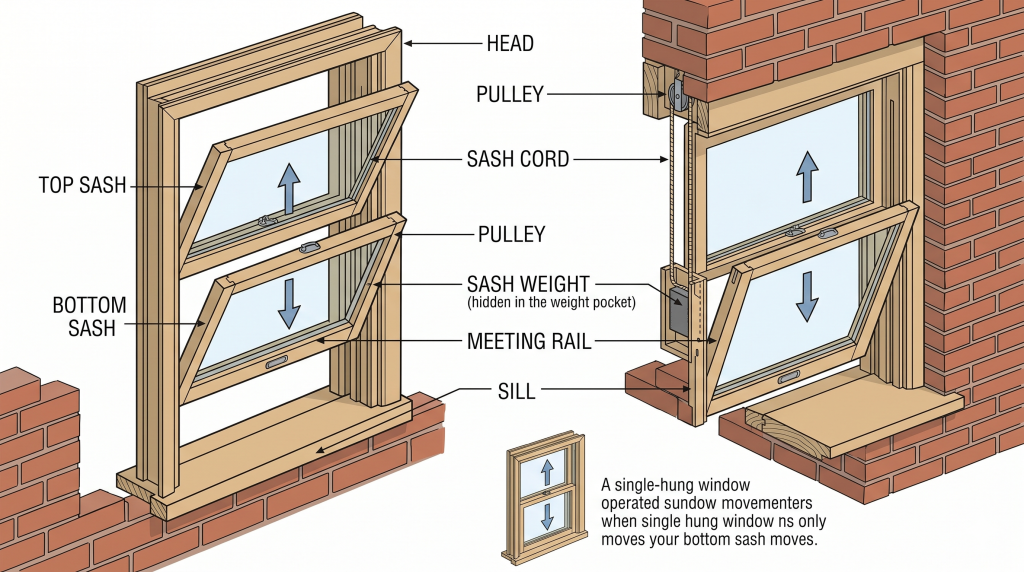
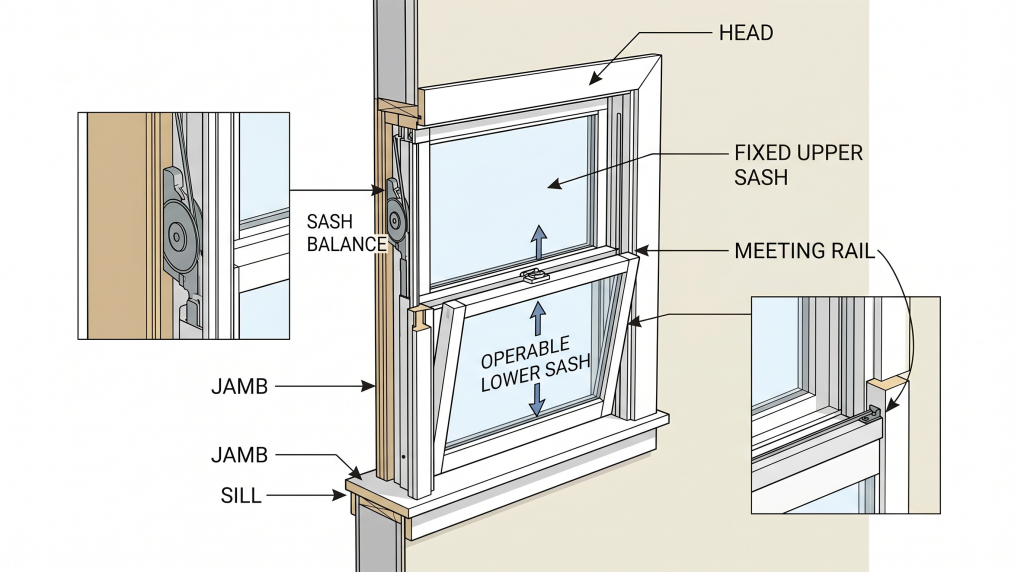
The most fundamental step in how to identify sash window types is determining how the window moves. This is defined by the types of sash window mechanism hidden within the frame.
Double Hung Sash Window
The double hung sash window is the hallmark of classic British architecture. In this design, both the top and bottom sashes are functional, sliding vertically independently of each other. This allows for superior ventilation—letting warm air out the top and cool air in the bottom. Many homeowners are surprised to find their top sash is simply “painted shut” rather than being a different window type entirely.
Single Hung Sash Window
A single hung sash window looks nearly identical to a double-hung version, but only the top sash is fixed permanently into the frame. These are commonly found in later Victorian or Edwardian properties where cost-saving was a factor. While they offer less ventilation control, they are often easier to draught-proof due to fewer moving parts.
How to Identify Sash Window Types by Era
The aesthetic of your window—specifically the “glazing bars” (the timber strips holding the glass)—is the best way to date your property. Understanding the architectural history of British windows can help you choose the right restoration approach.
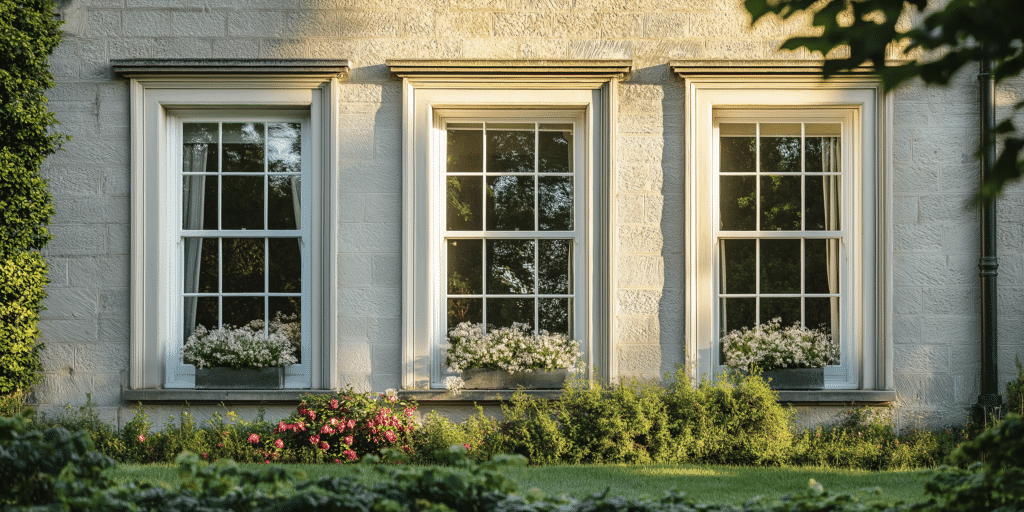
1. Georgian Patterns (1714–1837)
Typically identified by the “six-over-six” pane configuration. Because glass was expensive and hard to manufacture in large sheets, windows were comprised of many small panes held together by thick timber bars.
2. Victorian Sash Windows (1837–1901)
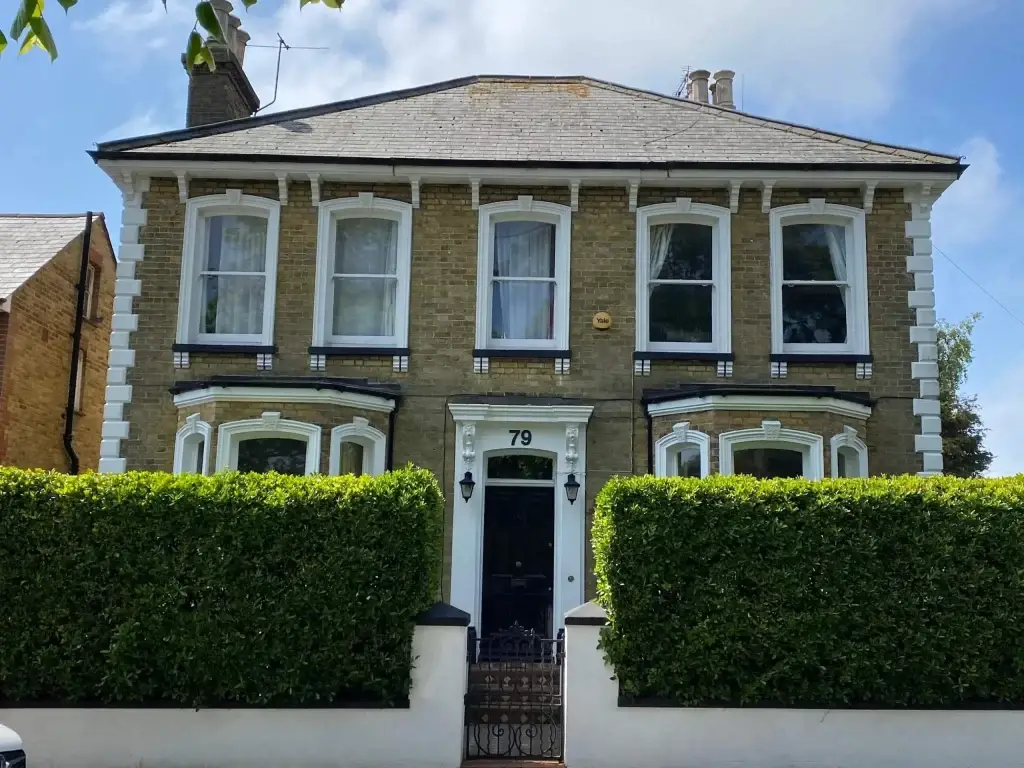
With the advent of larger glass sheets, Victorian sash windows moved toward a “two-over-two” or even “one-over-one” design. A key identifier here is the Sash Horn. These are decorative timber protrusions on the corners of the top sash, designed to strengthen the joints against the weight of the new, heavier plate glass.
3. Edwardian and Queen Anne Styles
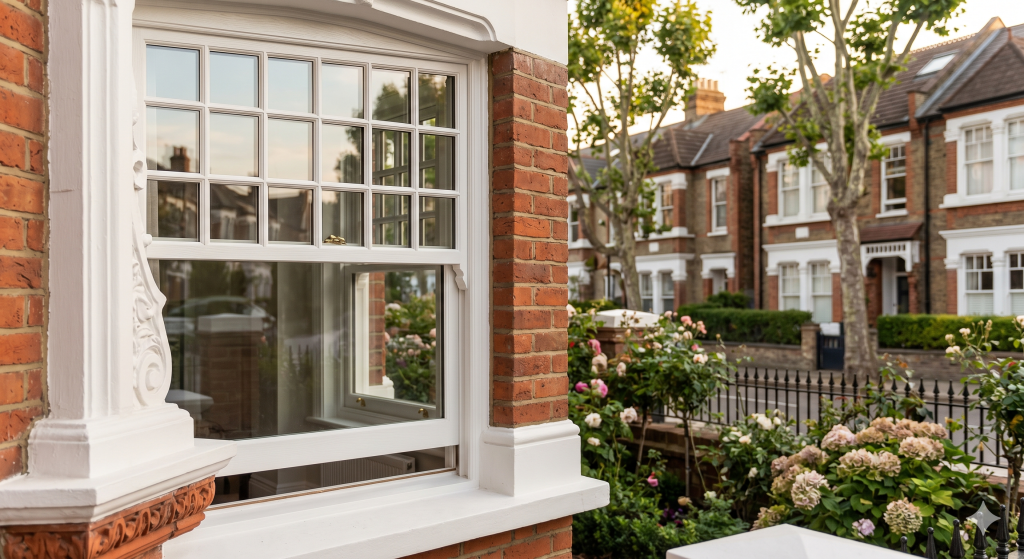
These often feature a “multilight-over-one” design. The top sash might have many small decorative panes (sometimes with stained glass), while the bottom sash is a single large pane to allow a clear view of the street.
Once you have identified your specific architectural era, you can better navigate the complexities of listed building sash repair to protect your home’s historical integrity.
Technical Components: Types of Sash Window Mechanism
Beyond the “hung” style, the internal hardware is a key identifier. Traditionally, UK windows use a pulley and weight system. This involves lead or iron weights hidden in “pockets” within the side of the frame, connected to the sash via a cotton cord.
In some 20th-century renovations, you may find spiral balances. These are plastic or metal tubes containing a spring mechanism. Identifying which mechanism you have is vital for accurate repair and ensuring that “feeling of quality” during a restoration. If your window stays open on its own without a prop, your mechanism is likely still functional but may need a service.
Modern Variations: Mock Sash Windows
In newer builds or budget renovations, you may encounter mock sash windows. These are actually casement windows that open on a hinge but have a horizontal bar to mimic the appearance of a sash. If your window “swings” or “tilts” rather than sliding vertically, it falls into the decorative rather than functional sash category.
The Golden Ratio Restoration Standard
Regardless of your specific window type, preserving the original timber and glass is always our priority. Whether you have original Victorian sash windows or a later double hung sash window, our London-based team specialized in revitalizing these intricate mechanisms.
Need help identifying your windows? Contact Golden Ratio Sash Windows and Doors today. We provide expert surveys to help you understand your property’s unique window types UK history and how best to enhance their thermal performance.