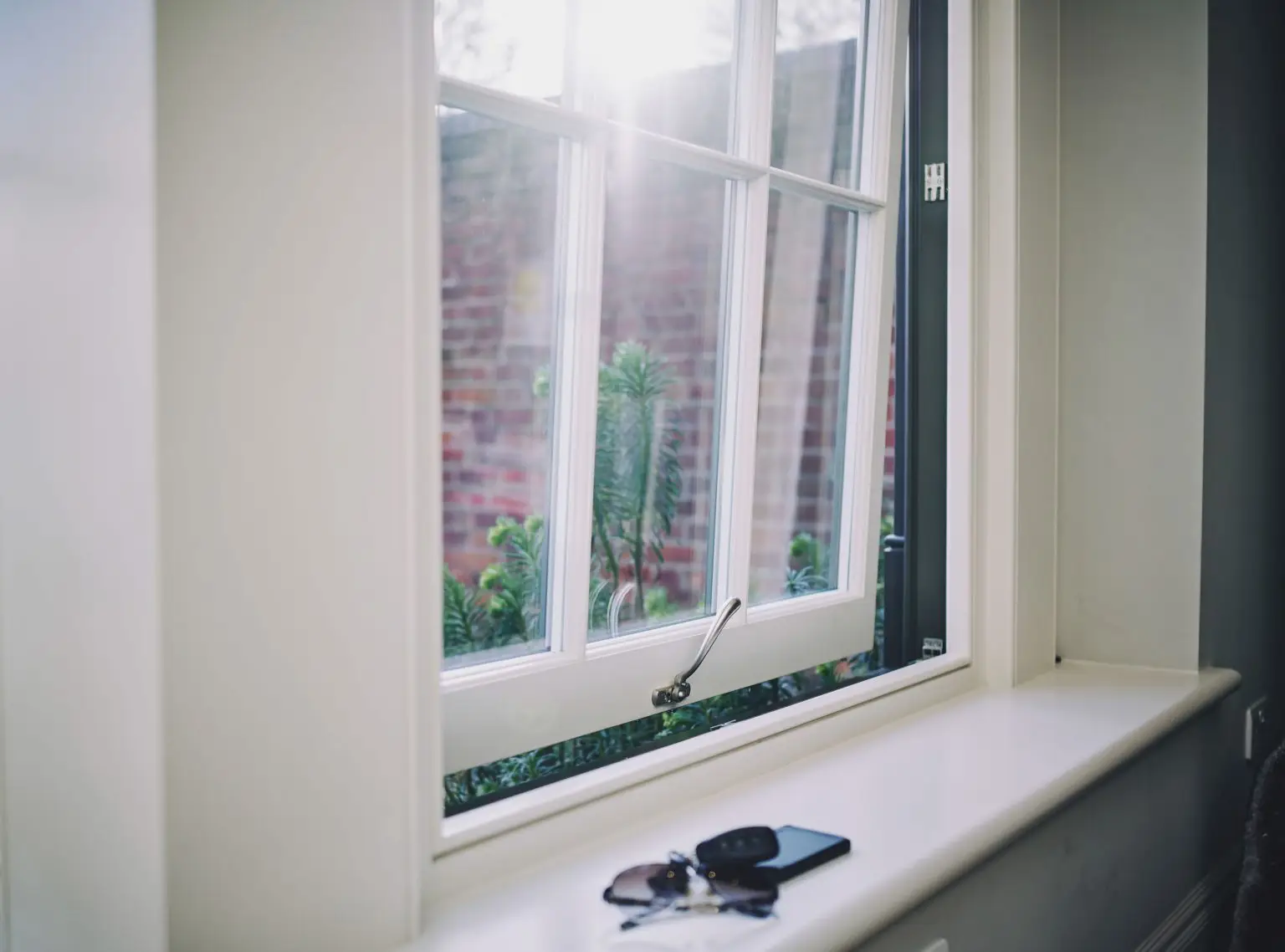

The Complete Guide to Replacing Sash Windows in Grade 2 Listed Buildings
Replacing windows in a Grade 2 listed building is significantly more complex than a standard home renovation. Because these buildings are protected by law to preserve British architectural heritage, every detail—from the thickness of the glass to the curve of the sash horn—is scrutinized by local authorities.
At Golden Ratio Sash Windows & Doors, we specialize in navigating the strict requirements of London’s conservation officers to deliver replacements that offer 21st-century thermal performance while remaining historically indistinguishable from the originals.
Even in the most protected properties, there are approved methods for replacing single glazed sash windows with double glazing using ultra-thin vacuum glass.
1. Understanding the Threshold for Replacement
In the eyes of Historic England and local London councils (like Westminster, Kensington & Chelsea, and Islington), the “best” window is an original window. To get approval for replacement, you must typically demonstrate irretrievable disrepair.
This means you must prove that the existing timber is structurally unsound and that repair is no longer a viable or economic option. As part of your application for Listed Building Consent (LBC), a detailed condition survey is often required to justify why the fabric of the building needs to be changed.
2. The “Like-for-Like” Requirement
When replacement is deemed necessary, the new windows must be an exact architectural replica. Councils will not accept “standard” modern sash windows. The replacement must match:
- The Sightlines: The exact width of the stiles and rails must match the originals to the millimeter.
- Glazing Bar Profiles: Period windows often have very slim glazing bars (lambs tongue or ovolo profiles). Replicating these is the most difficult part of heritage joinery.
- Sash Horns: If your original windows have decorative “horns” on the upper sash, the replacements must replicate that specific carving style.
- Ironmongery: To stay compliant, you should use historically accurate sash locks, lifts, and pulleys, usually in solid brass or blackened iron.
3. Solving the Double Glazing Dilemma
For years, owners of listed buildings were forced to stick with cold, draughty single glazing because standard double glazing (usually 20mm–24mm thick) requires chunky frames that ruin the building’s character.
The Solution: Vacuum Glass & Slimline Units
We now utilize revolutionary Vacuum Glass (such as FINEO). At only 7mm to 10mm thick, these units fit into traditional single-glazing rebates. They provide the thermal insulation of triple glazing and the acoustic performance of a brick wall, all while looking like a single pane of glass. This technology has become a “game-changer” for gaining planning approval in London’s strictest conservation areas.
4. Timber Choice: Why Material Matters
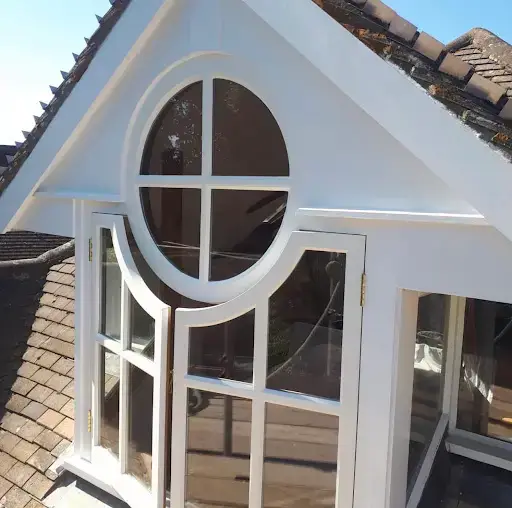
The council will almost always insist on a high-quality timber. While original windows were often slow-grown Baltic pine or oak, many modern softwoods rot within a decade.
We recommend Accoya® wood for listed building replacements. It is a modified timber that is carbon-neutral and virtually rot-proof. Most importantly for listed buildings, Accoya is “dimensionally stable,” meaning it does not shrink or swell. This prevents the common issue of sash windows sticking in the summer or rattling in the winter, and it ensures the paint finish lasts years longer than on standard timber.
5. The Application Process: Drawings and Documentation
To get your project over the finish line, you cannot simply send a photo to the council. You will need to submit:
- 1:10 Scale Drawings: Showing the window in the wall.
- 1:2 or 1:1 Section Drawings: These are “cut-through” views that show the exact profile of the glazing bars, meeting rails, and sills.
- Heritage Statement: A document explaining why the replacement is necessary and how the new design preserves the building’s significance.
6. The “Golden Ratio” Approach
At Golden Ratio Sash Windows & Doors, we take the stress out of the process. We understand the nuances of Georgian, Victorian, and Edwardian design. Our bespoke joinery is crafted in a way that respects the history of your home while drastically improving your quality of life through better heat retention and noise reduction.
Don’t risk an enforcement notice by installing non-compliant windows. If you are considering a replacement for your listed property, contact us for an expert consultation. We can help you determine the best path forward for both your home and the local planning office.