







The Brief
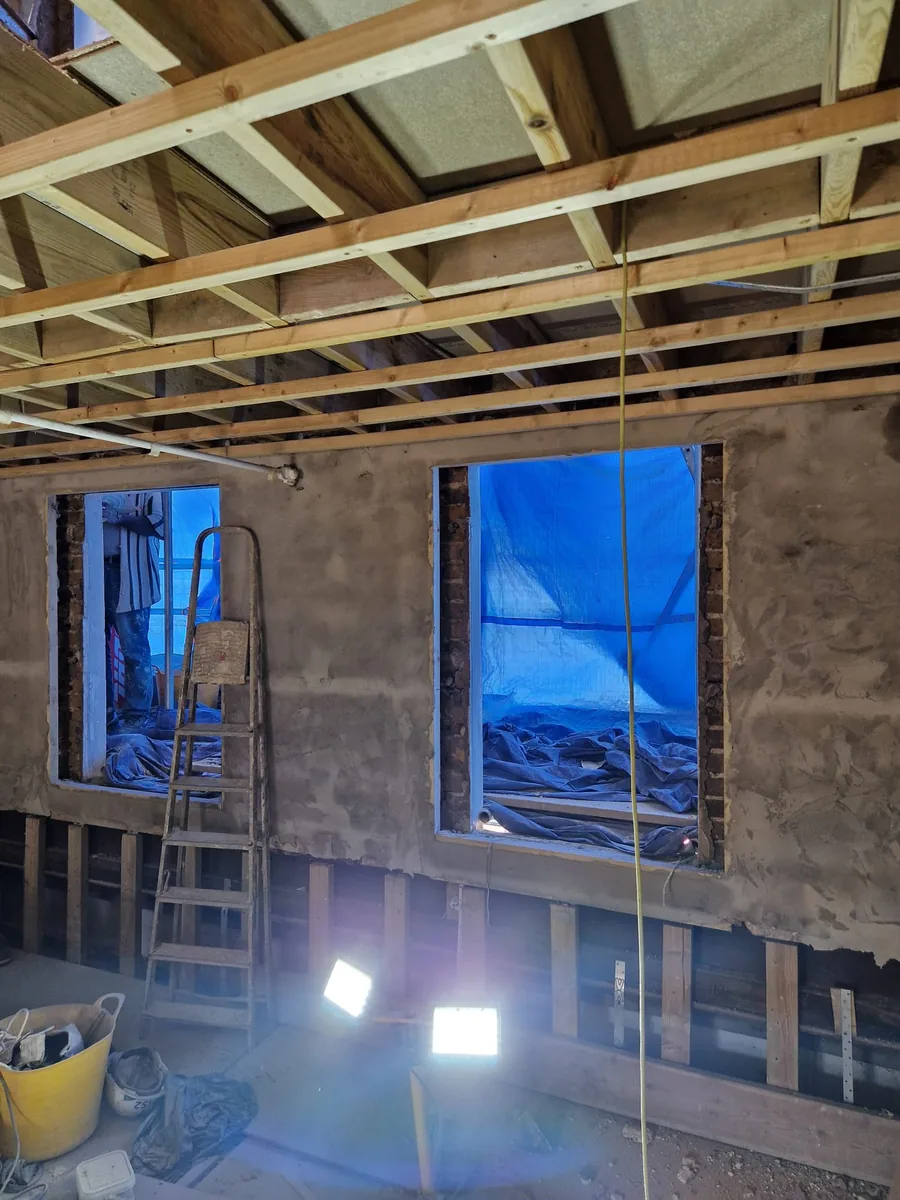
Some jobs start with a window. This one started with a building that barely had walls. By the time we were called in, the upper floors had been taken back to bare brick and bare joists — no plaster, no ceilings, no floors, and every window opening blanked off with blue sheeting from the outside to keep the weather out.
The instruction from the client was as short as briefs get: bring the original windows back to the building. Not something that would pass at a glance, and not a modern window in a period opening. The sashes that belonged there, rebuilt properly, so that when the scaffolding came down the front of the building looked like nothing had ever happened to it.
That is a harder brief than it sounds, because the two halves of it pull in opposite directions. The windows had to look genuinely traditional from the street — slim sightlines, putty lines, the shadow of a real glazing bar. They also had to be double glazed and meet current Building Regulations. Reconciling those two things is the whole of this project, and it comes down to one decision: the glass.
Heritage Glass Sash Windows: Double Glazing That Reads as Single
The windows were glazed with 12mm heritage glass — a slim-profile toughened double glazed unit, roughly half the thickness of the sealed units used in a standard modern window.
The thickness is the entire point. A conventional double glazed unit is somewhere around 24 to 28mm, and it will not physically fit in a traditional sash rebate. To use one you have to deepen the rebate, thicken the glazing bars and hold the glass in with a chunky applied bead. Do that to a period sash and it stops looking like a period sash: the bars fatten up, the sightlines coarsen, and the elevation loses exactly the delicacy that made it worth keeping.
A 12mm heritage unit sits in the rebate the original single-glazed pane would have occupied. The bars stay slim, the proportions stay right, and from the pavement the window reads as it always did — while the room behind it gets the thermal and acoustic benefit of a sealed double glazed unit. Every unit here was toughened in line with current Building Regulations. It is the compromise-free answer for heritage glass sash windows, and it is why this specification exists at all.
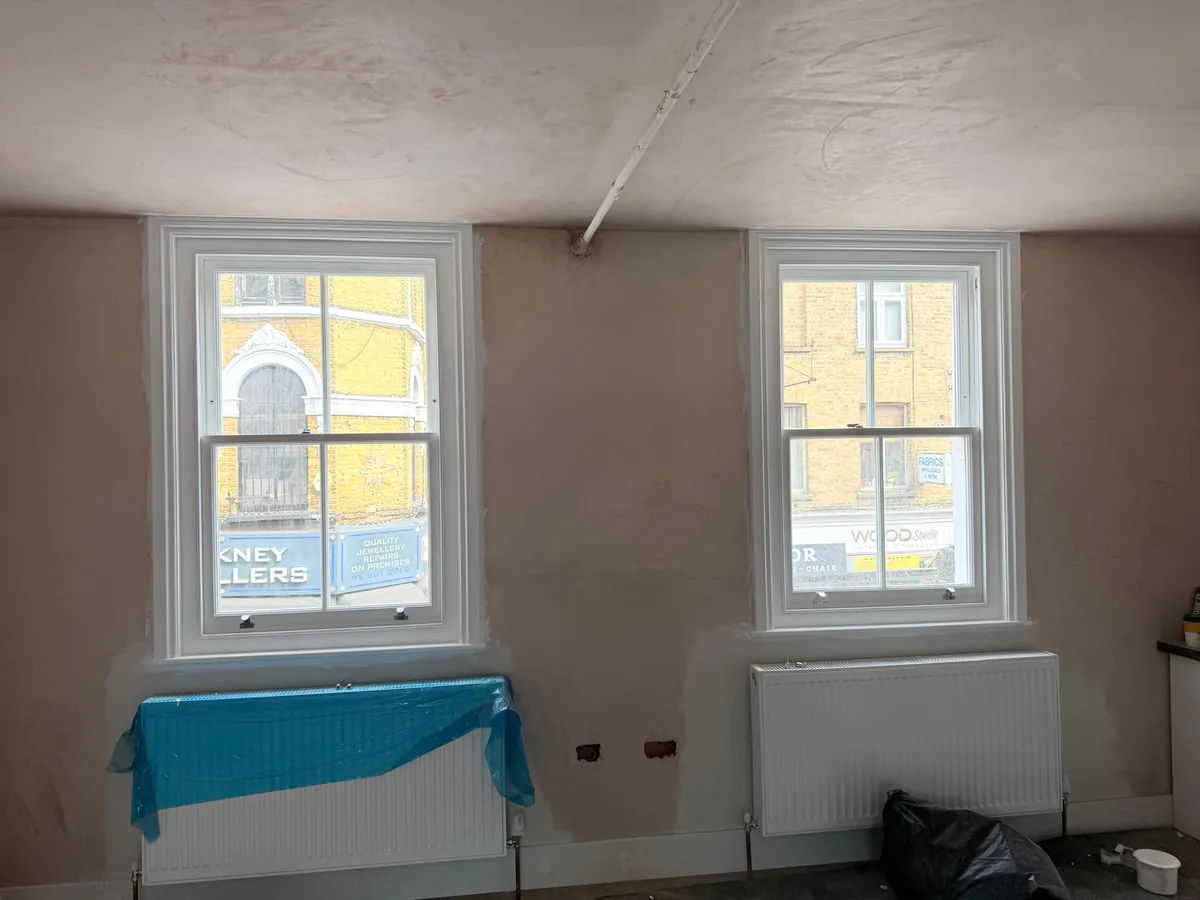
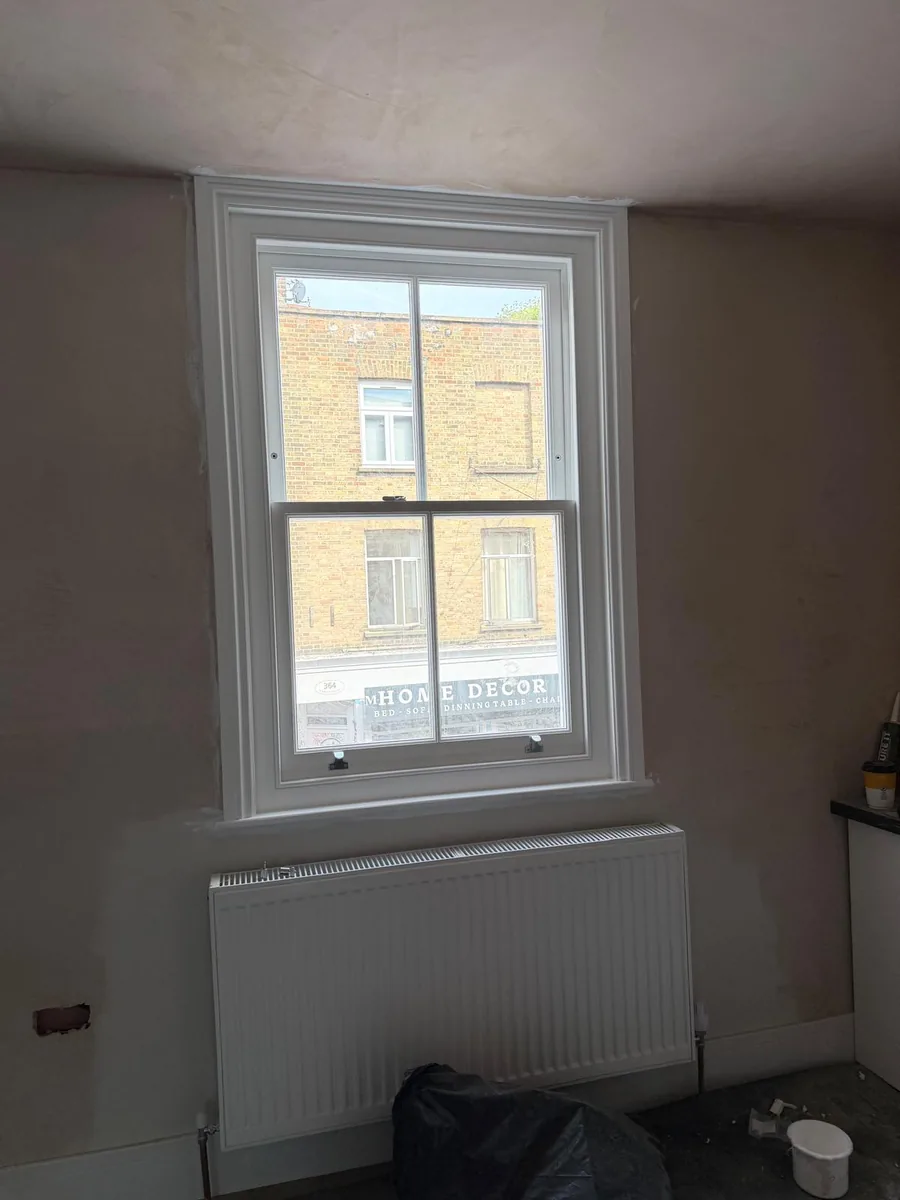 Windows in and plastered up to — architraves and sill already finished
 Slim bars and a true putty line — the detail the whole job turns on
Glazed with Linseed Oil Putty
Because the glass is slim enough to sit in a traditional rebate, it could be bedded the traditional way: in linseed oil putty, hand-worked to a clean angled fillet, rather than held in with a machined timber bead.
That choice does two things. Visually, a putty line is unmistakable — a thin, crisp, slightly soft-edged triangle of white against the glass, quite unlike the hard, square shadow an applied bead throws. It is one of those details nobody consciously identifies and everybody notices the absence of. Practically, putty stays slightly flexible for years, so it accommodates the small seasonal movements of a timber sash instead of resisting them, and it can be raked out and made good in sections without dismantling the window.
It is also slow, skilled work that has to be done by hand. Here is one of our joiners putty-glazing a sash — the same process used on every window in this building:
There is more on the method, and why we still use it, in our guide to traditional window glazing with linseed oil putty.
The Specification
Sash boxes and sashes were made from premium Accoya — acetylated timber that no longer readily absorbs moisture, so it will not swell, shrink, warp or rot, and holds paint far longer than softwood because the surface underneath stays stable. It carries a 50-year above-ground warranty. On a building being refurbished this comprehensively, putting anything shorter-lived back into the openings would have been a false economy.
Full Specification
- Sash boxes & sashesPremium Accoya with a 50-year warranty
- Glazing12mm heritage glass — slim-profile toughened double glazed units, to current Building Regulations
- Glazing methodBedded in traditional linseed oil putty, hand-finished — no applied beads
- Weight managementTraditional lead weights on 6mm white nylon sash cord
- IronmongeryPolished chrome: 4no sash pulleys, 1no lock, 2no sash lifters and 2no sash restrictors per window
- Internal sillMeranti hardwood, factory sprayed in satin white
- ArchitravesGreen moisture-resistant MDF, factory spray painted to match the windows
- VentilationHidden trickle vent concealed within the sash box
Two details are worth drawing out. The lead weights and nylon cord are a deliberate choice over spiral balances — it is the mechanism the building was built with, it gives that smooth weighted travel that is the pleasure of a sash window, and in fifty years' time it is repairable by anyone with a screwdriver and a length of cord. And the sills and architraves were factory sprayed rather than brushed on site, so the finish is even and completely free of brush marks, and the joinery arrived ready to install into a building that was still a dusty shell.
Hidden Ventilation
Building Regulations require background ventilation, and the standard way to provide it is a trickle vent slotted through the head of the frame — a row of plastic slots across the top of a window that was designed without one. On a heritage elevation it undoes a great deal of careful work.
Instead, a hidden trickle vent was built into the sash box. The air path runs through the box itself, so the window ventilates exactly as the regulations require while staying completely invisible — from the street and from inside the room. Nothing interrupts the sashes, and nothing gives the game away.
The Result
Every window on the front elevation was replaced, from the two dormers in the mansard down through both floors. From across the road the building simply looks like a well-kept period building: white sashes against yellow stock brick, slim bars, clean putty lines, correct proportions. Nothing announces that the glass is double glazed or that the timber is modified, which is precisely the measure of success.
Inside, the rooms that were bare brick and joists are now finished flats — satin white sills, matching architraves, chrome lifters and restrictors, and windows that run smoothly on their weights. The dormer rooms, which are always the awkward ones on a mansard, got the same specification as everything else rather than a cheaper substitute.
Heritage glass sash windows are the answer whenever a building deserves double glazing but cannot afford to look like it has any. If you are restoring a period property in Hackney or anywhere in London, see our full guide to double glazed sash windows, or browse the gallery for more finished work.
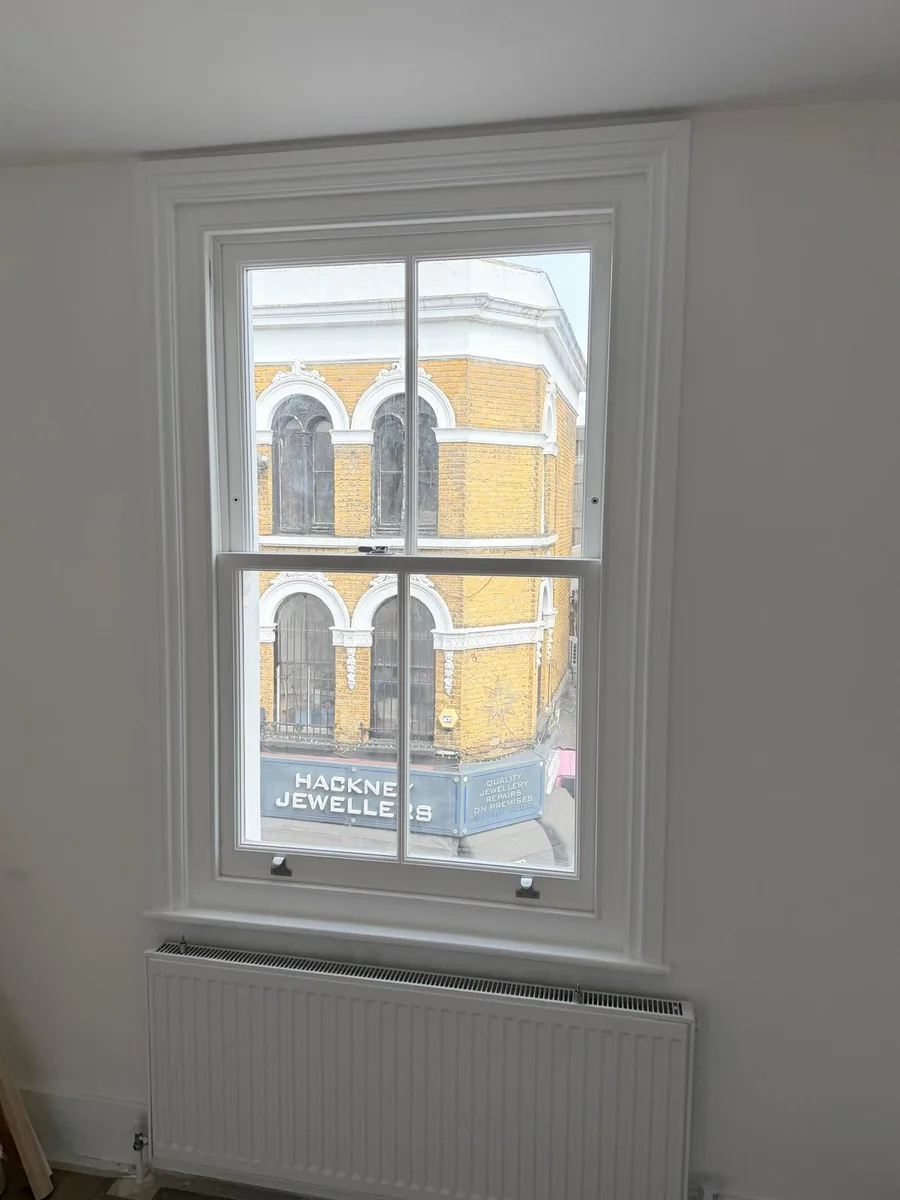 Finished — slim bars framing the street
 The same room the shell photo was taken in
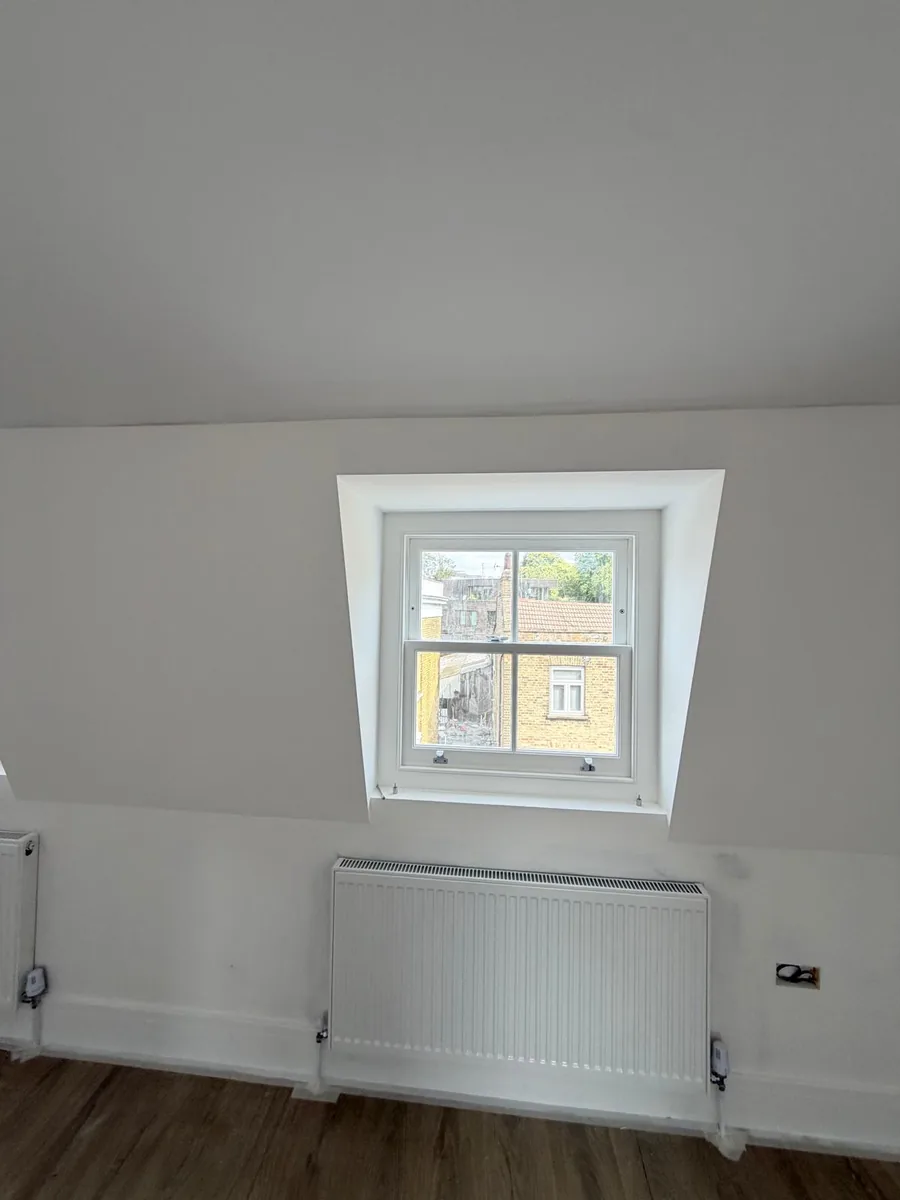 Dormer sash in the mansard — same specification throughout
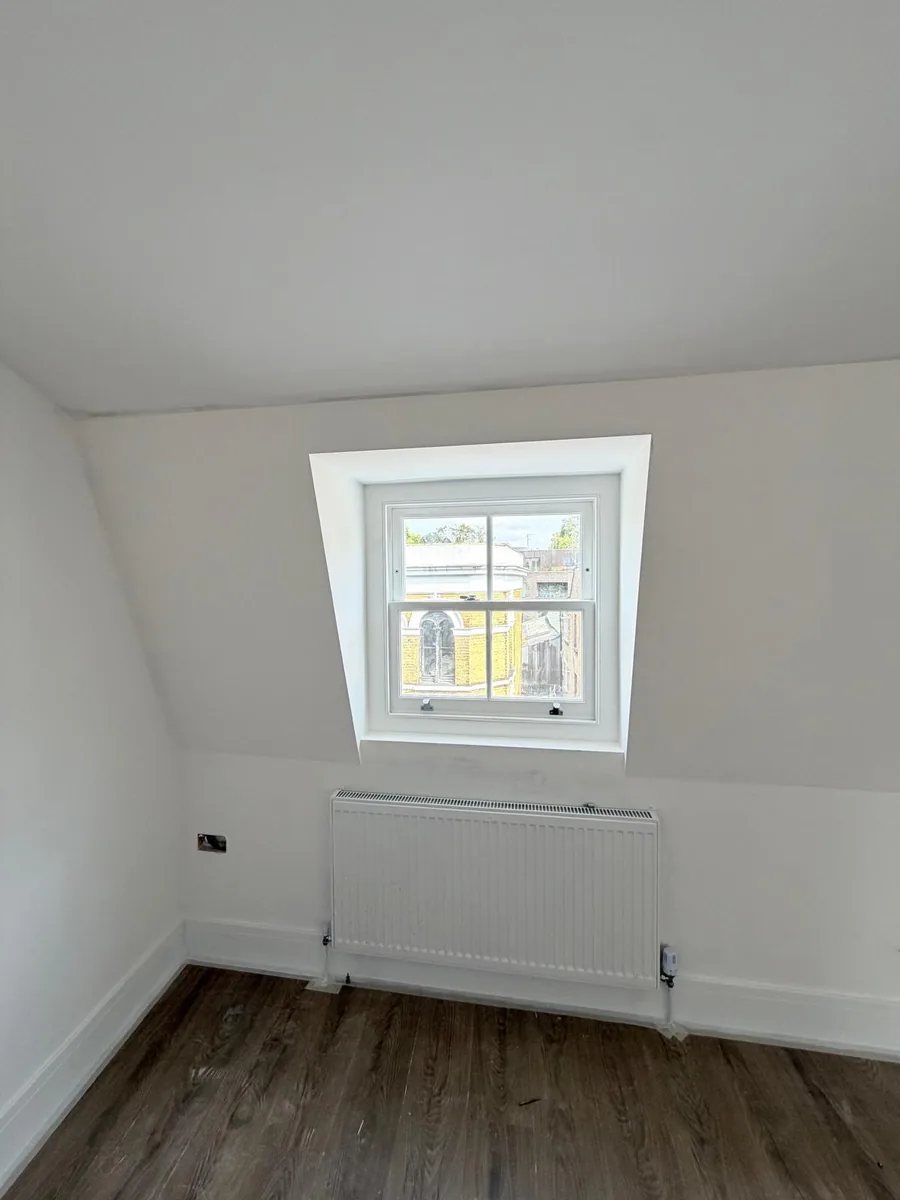 The finished loft room
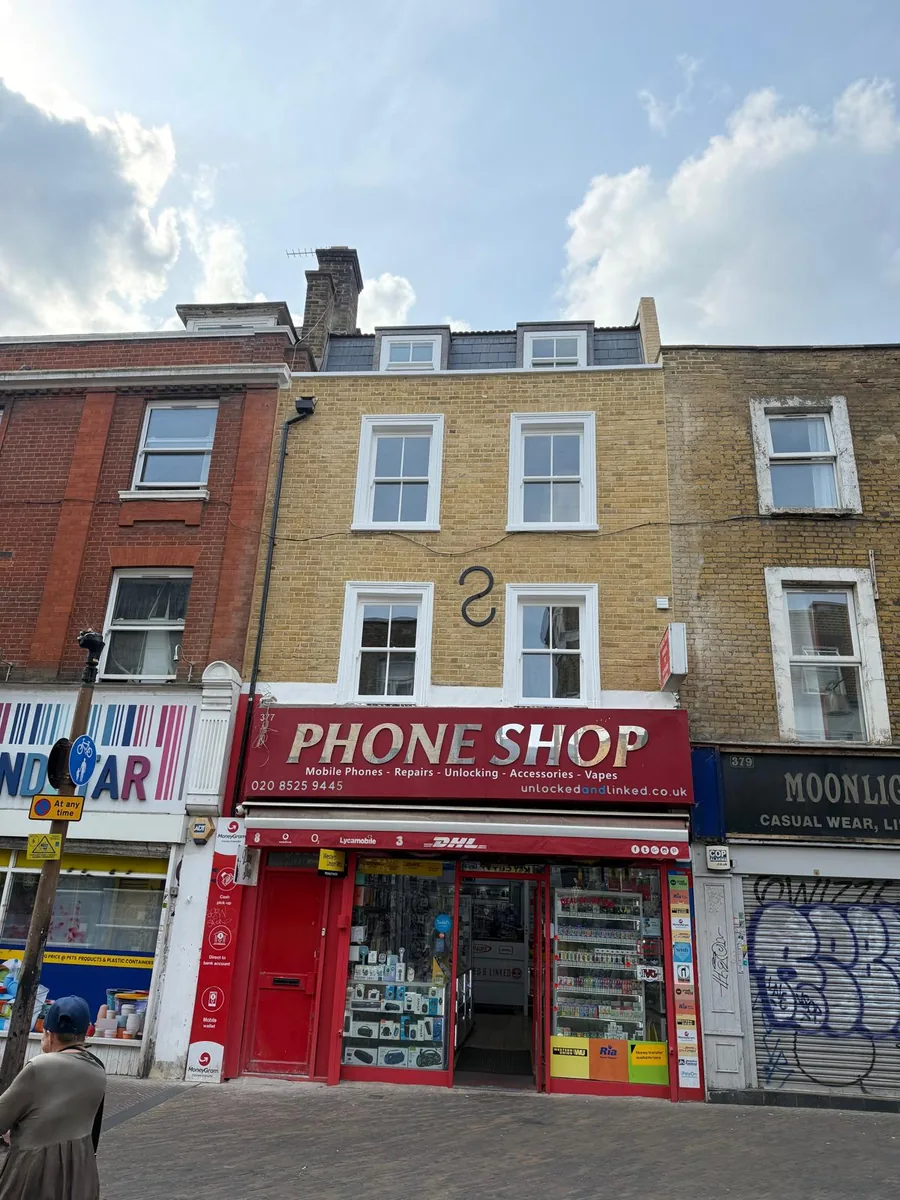
Need Double Glazing That Doesn't Look It?
We make heritage glass sash windows in premium Accoya for period and listed buildings across every London borough — slim-profile units, traditional putty glazing, hidden trickle vents and hand-finished paintwork. Free site survey and written quotation.