







The Brief
Every window replaced, without losing the bay's character
The windows on this Islington terrace had reached the end of a long life. Paint was lifting from the cills, the lower sashes had swollen against their frames, and draughts came through the meeting rails on a windy night. The homeowners wanted the lot replaced — front and rear, every opening in the house.
The complication was the ground-floor bay. A canted Victorian bay with coloured margin lights framing the top of each sash is a very particular thing to look at, and replacing it badly is obvious from the pavement. Whatever went back in had to hold the proportions of what was there, and the coloured glass had to look like it belonged to the building rather than to a catalogue.
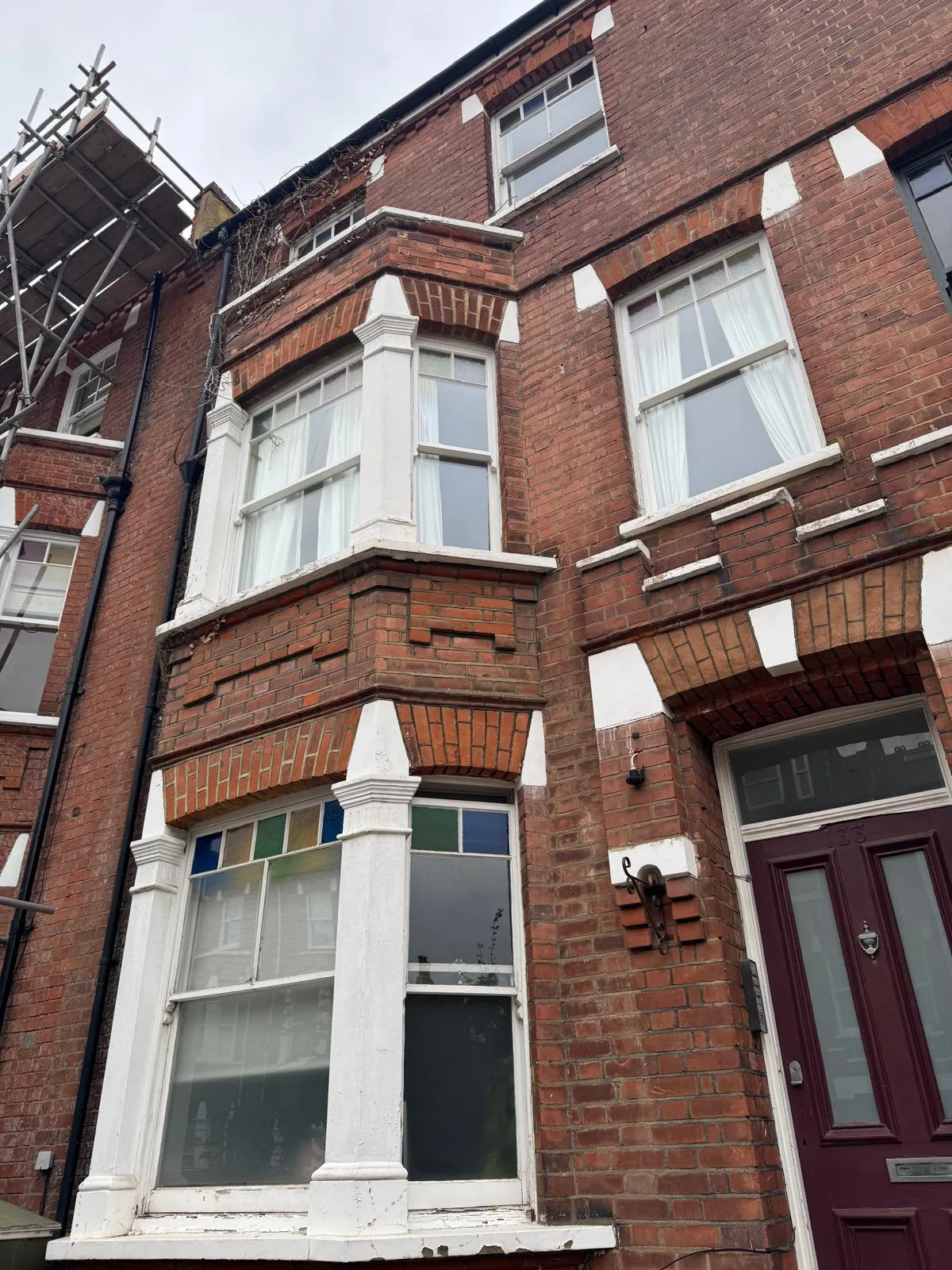
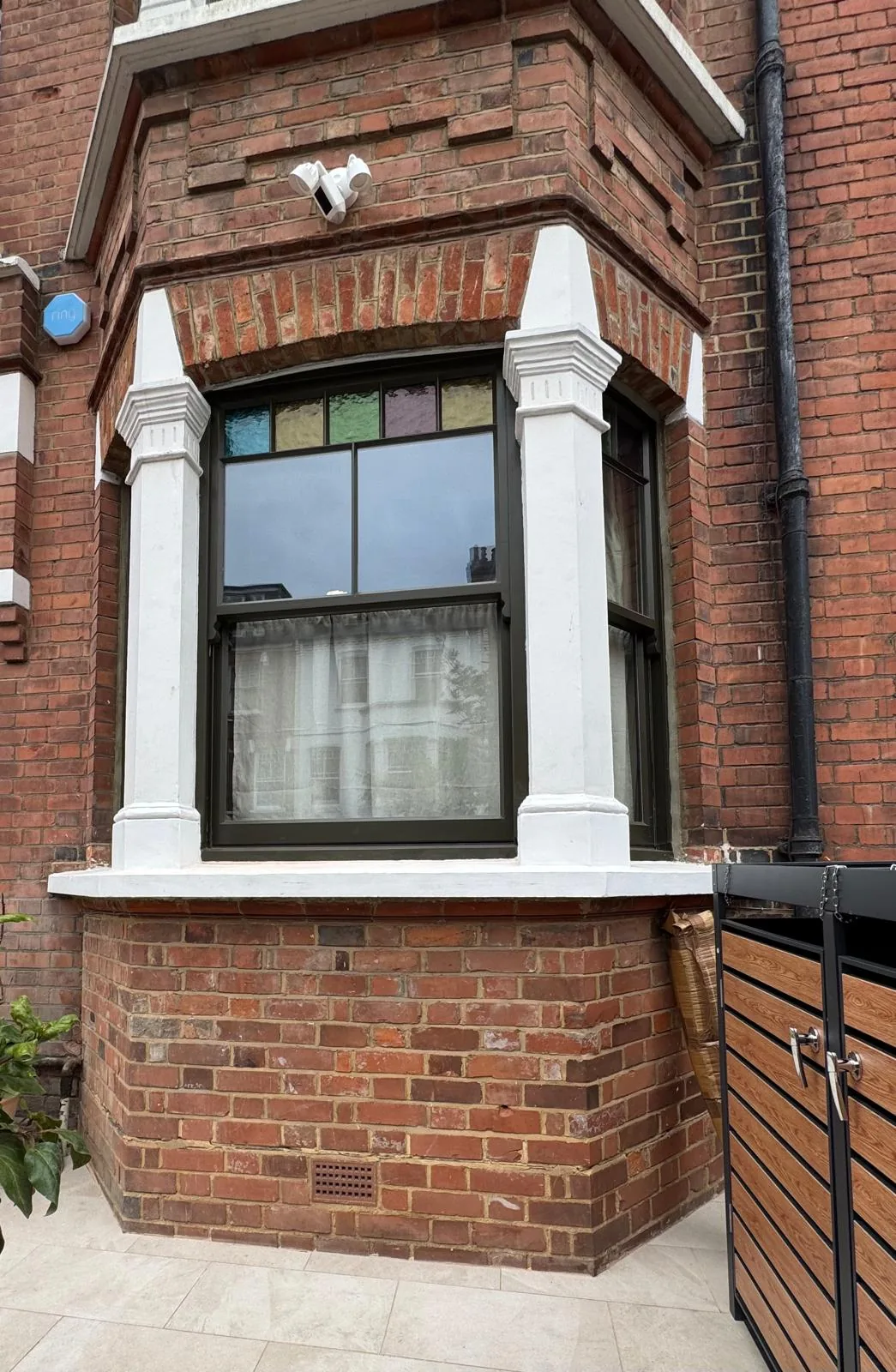
Paint failure across the cills and sashes, and the same bay rebuilt in Accoya with new margin lights made to the original pattern.
The Glass
New stained glass, made to the original pattern
The margin lights were made new in our workshop, following the pattern that was already on the building: the same arrangement of coloured squares framing the top of each sash, the same proportions, the same rhythm across the bay.
Matching a Victorian margin light is less about colour matching than it looks. The sequence of colours in an original is rarely a neat repeat — it varies across the bay, and that slight irregularity is a large part of why the real thing reads as period and a reproduction often does not. We set the new lights out to follow the existing arrangement rather than tidying it into a pattern that would have looked too regular.
The glass itself is textured rather than flat, so it catches and breaks the light the way older cathedral glass does. Each panel was then leaded and fitted into its sash as a single-glazed unit, which is how a margin light should sit — a sealed unit behind coloured glass kills the depth that makes it worth having.
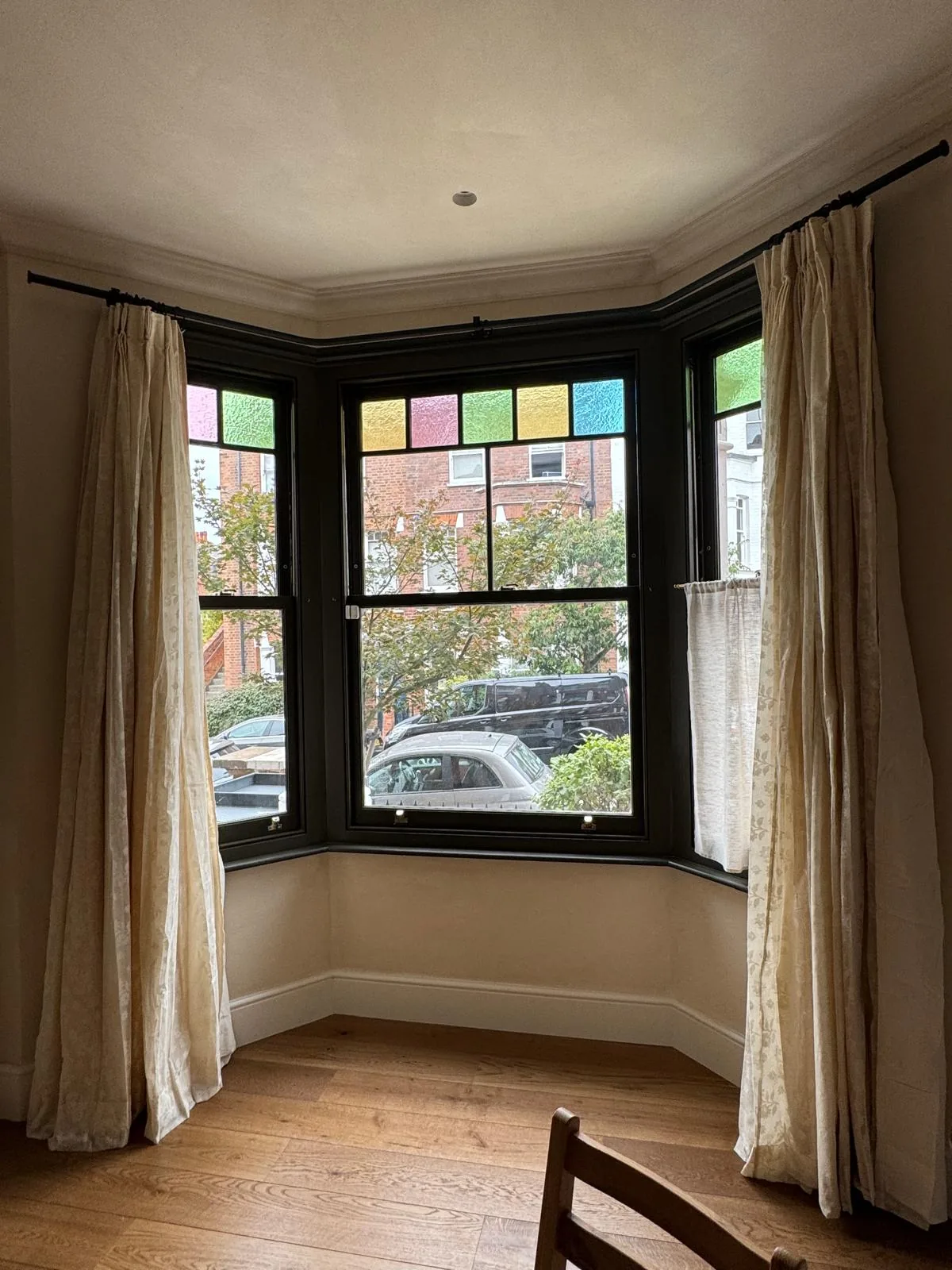
Inside the bay — the new margin lights, and the slim sightlines that 12mm heritage glazing allows.
Materials
The timber and the glazing
Every window on the property, front and back, was remade in premium grade Accoya®. Accoya is a modified softwood: the timber is treated through its full thickness so it barely takes up moisture, which is what causes a traditional sash to swell in winter and stick in its frame — exactly the fault the old windows had developed. The dimensional stability also means the paint film sits on a substrate that is not constantly moving underneath it, so the finish lasts substantially longer than it would on standard softwood.
The clear panes were replaced with 12mm slimline heritage double glazing. The number matters on a period property. A standard modern double-glazed unit is around 24–28mm thick, which forces a much heavier sash section and a wider sightline — the visible band of timber around the glass. Put that on a Victorian bay and the proportions go wrong immediately; the window reads as modern from across the street even when everything else is right.
At 12mm, the unit fits within a traditional sash section. From the pavement the glazing bars and meeting rails hold the same slim proportions as the originals, while the room behind them gets the thermal and acoustic performance of a sealed unit. The margin lights sit as single-glazed leaded panels, as coloured glass should — sealing a unit behind them would have flattened the depth that makes them worth having.
The pattern came off the building, not out of a catalogue.
On Site
The finished windows, inside and out
The Detail
Like for like — with one change
The new windows replicate the originals in every dimension that matters: section sizes, glazing bar profiles, horn detailing, meeting rail heights and the proportions of the bay. Held up against the before photographs, the joinery is a match.
The one deliberate departure was colour. The old frames were white — as most of the street still is — and the homeowners wanted a dark olive-bronze instead. It is a significant visual change and it was their decision, made with the elevation in front of them. It suits the red brick better than the white did, and because the profile underneath is correct, the window still reads as a period sash rather than a modern insertion wearing a period colour.
The Result
Draught-free, double glazed, and still Victorian
Front and back, every window on the property now opens and closes properly, seals against draughts, and carries slimline double glazing without looking like it. The bay reads as it always did from the street — same proportions, same coloured lights across the top — but in timber that should outlast what it replaced by a considerable margin.
Seen from inside, the margin lights do the thing coloured glass is for: throw colour across the room when the light is right. That was the whole point of making them properly.
Want coloured glass in your bay?
We make stained glass margin lights in our own workshop, matched to whatever is already on your building. Send us a photograph of the window and we will tell you what is possible.