







How Planning Permission Works for Grade 2 Listed Building Window Replacement
If you own a Grade 2 listed building, you can't simply swap out tired sash windows for new ones. Any change to the windows needs Listed Building Consent from your council, and — unlike an ordinary planning application — the council will only approve a design that's genuinely like-for-like: matching material, matching glazing bar pattern, matching horn detailing, and matching the historic proportions of the original window.
Where a property sits in a Conservation Area with an Article 4 Direction rather than being statutorily listed, the process looks almost identical in practice — a full planning application, a heritage justification, and the same scrutiny of the proposed design against the existing streetscape — even though it's technically a different consent regime. If your property is in a conservation area but isn't listed, our guide to conservation area window rules explains how to check whether an Article 4 Direction applies to your street and what you can do without permission. Either way, the goal for the homeowner is the same: windows that keep the character of the building while actually working properly.
This is the part that puts most homeowners off. Getting a Grade 2 listed building window replacement through planning can feel like a brick wall, and going it alone — without an architect who knows what a specific council's conservation officers want to see — is where applications stall or get refused.
Why We Work With Heritage Window Architects, Not General Architects
We work with a small number of architects who specialise specifically in window and joinery planning applications, with experience across all London boroughs. That specialism matters: a general architect can draw an elevation, but a heritage window specialist knows how a particular borough's conservation team likes to see a Design, Access & Heritage Statement structured, what evidence they'll expect (a condition survey, photographic audit, planning history), and how to justify the specific glazing and glazing-bar decisions in policy terms the council already uses.
Practically, this takes the burden of dealing with the council off your shoulders. The architect prepares the application — assembling drawings, condition photographs, and the written justification for why the existing windows need to change — while we work closely with them on the joinery specification. If a council pushes back on any part of the design, we adjust the window specification together with the architect until the application is approved, rather than the whole thing stalling.
What Happens While You Wait for Approval
The 6-8 week wait doesn't have to be dead time. While the application is with the council, we get on with everything that doesn't depend on the decision:
Application goes in
The architect submits the Listed Building Consent (or planning) application, backed by a condition survey, photographs of the existing windows, and a written heritage justification.
We order the timber and mill the sections
Rather than waiting for a decision before doing anything, we order the timber and prepare the joinery sections to the approved-in-principle specification, so a large part of the manufacturing work is already done by the time consent comes through.
Consent is granted
Once the council approves the application — adjusting the specification along the way if they've asked for changes — we finalise the windows.
Installation begins
Because most of the manufacturing groundwork is already done, installation can start soon after approval rather than adding months onto the process.
This is what keeps a Grade 2 listed building window replacement from turning into a year-long project. It's not about rushing the council — it's about not wasting the weeks they take to decide.
Case Study: Window Replacement in an Islington Conservation Area
A note on this example: this property is in the Hillmarton Conservation Area, Islington, and is protected by an Article 4 Direction — it is not a statutorily listed building. We're including it here because the planning process for Article 4 / Conservation Area window replacement is essentially the same as for a Grade 2 listed building, and it's a real, recently-approved application we can show. Address and architect details have been withheld at the client's request.
The existing sash windows were single-glazed, timber-framed, and — after decades without maintenance — in poor condition throughout: failed sash cords causing the sashes to drift, timber decay from water penetration, and paint and putty breaking down at the sills and box frames. A full condition survey documented each window individually before any design work began.
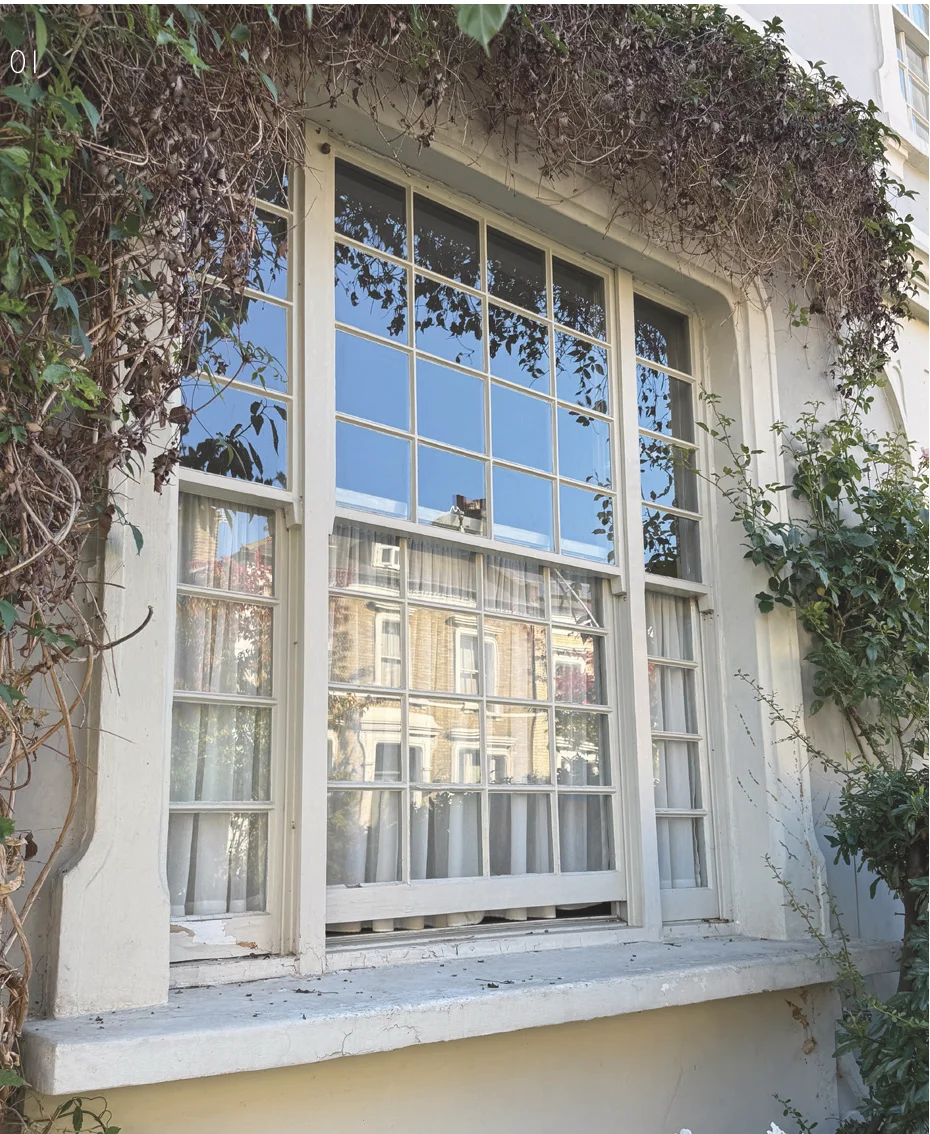 Before — original single-glazed sash, overgrown and unmaintained
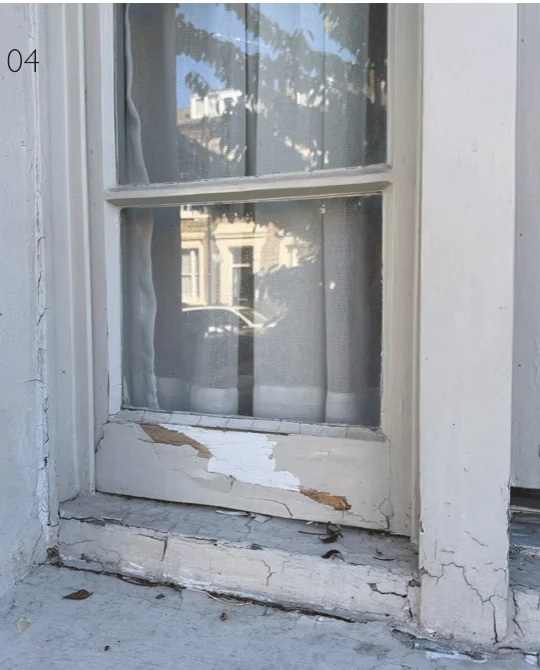 Before — decayed sill and failed paintwork from water penetration
The heritage architect's Design, Access & Heritage Statement made the case for replacement rather than repair: the existing windows had a busy, multi-pane pattern out of step with every neighbouring property on the street, so the proposed design actually reduced the number of glazing bars to match the prevailing historic pattern — improving both the streetscene and thermal performance by cutting down on cold bridging. The new units use slimline double glazing, under 12mm thick, to preserve the slender sash profile the conservation area guidelines require while meeting modern comfort standards.
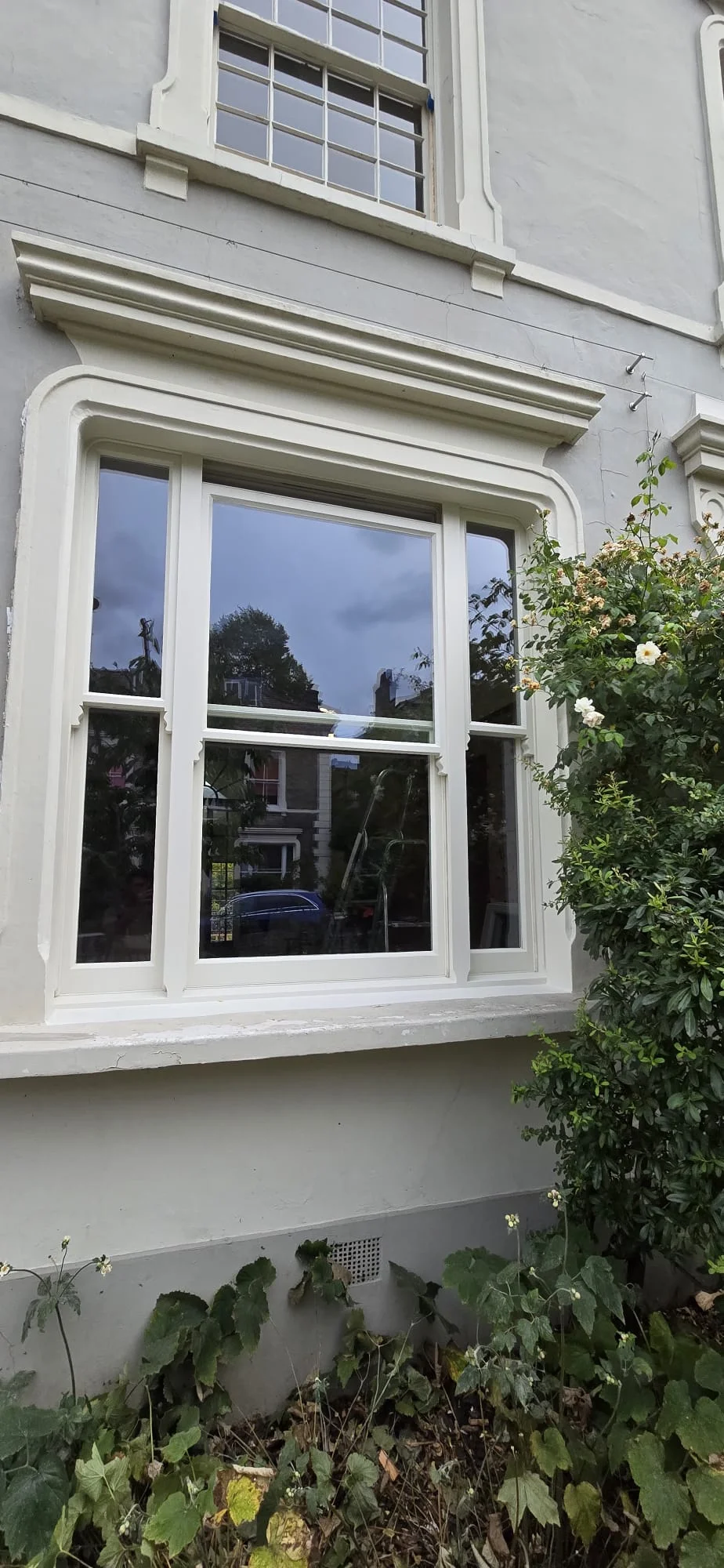 After — new timber sash with slimline heritage double glazing
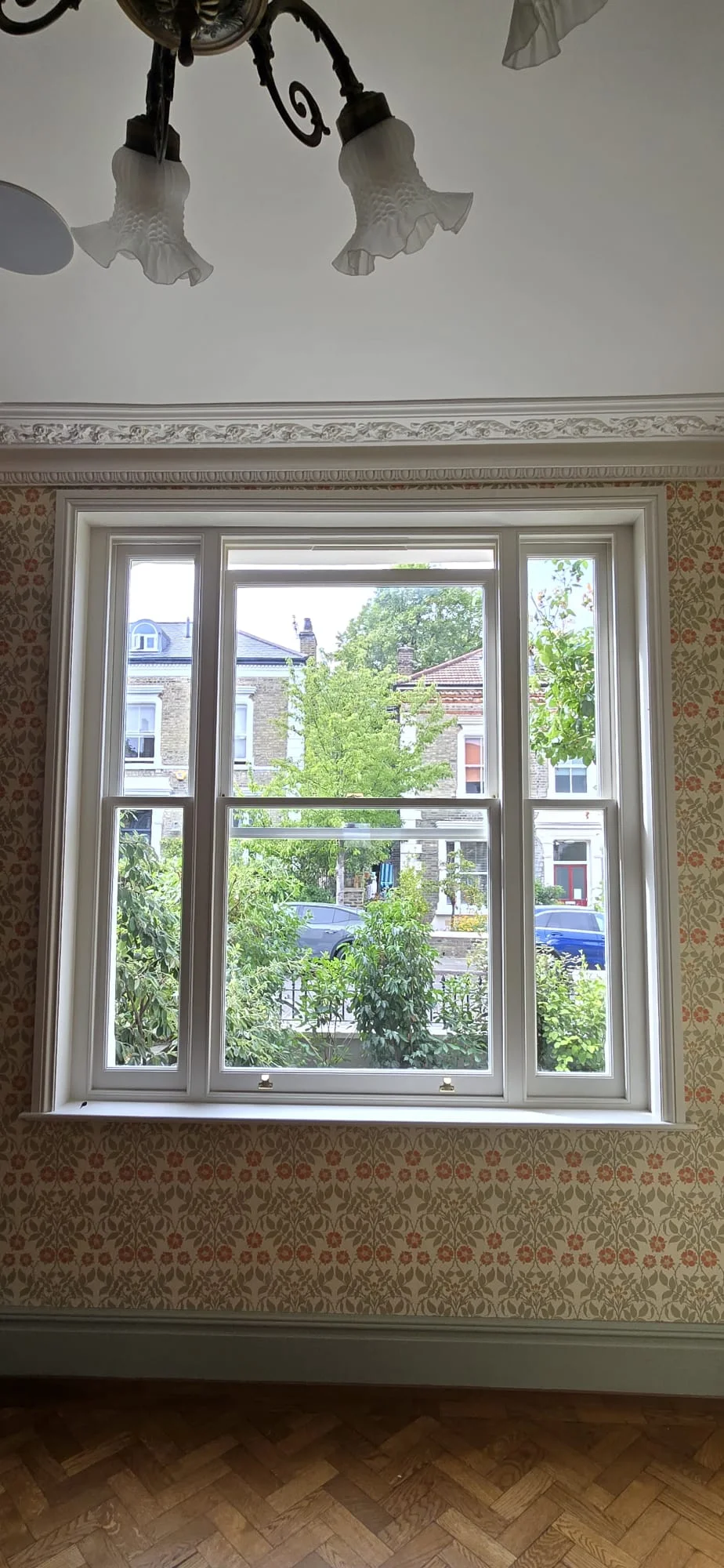 After — interior view, reduced glazing bars matching the historic pattern
The application was approved with the council's own guidance cited directly in support of the design: sympathetically designed timber double-glazed replacements are supported by policy where the existing windows detract from the conservation area's architectural coherence. That's the same principle that underpins a successful Grade 2 listed building window application — evidence of the existing condition, a design that respects the historic pattern, and glazing that meets the thickness councils will actually accept.
Planning a Grade 2 Listed Building Window Replacement?
We'll put you in touch with a heritage architect who knows your borough, and get the joinery moving while your application is with the council.