
Menu
London's trusted window installation service — call us for a free site survey.

Get a quote
Many homeowners ask us for vacuum glazing, often expecting it to mean they can keep their existing sash boxes. Here is how it compares with 12mm slimline heritage double glazing, and why it pays to assess the whole window rather than just the glass.

No obligation · Free site survey · Reply within hours




What it does well, why we do not currently offer it, and what it will not change about your existing sash boxes.
We do not currently offer vacuum glazing. It is a clever product, and certain systems can achieve lower U-values than conventional slimline double glazing. But long lead times, limited supply and higher costs lead us to believe that 12mm slimline heritage double glazing offers a more practical balance. And whichever glass you choose, it will not automatically let you keep your old sash boxes.
We receive a lot of enquiries asking specifically for vacuum glazing for sash windows, and many come with the same expectation: that choosing it means the existing sash boxes can stay, with only the sashes replaced. In many cases that is not a good long-term solution, particularly where the boxes are old, have moved over time or cannot take the additional counterweights.
This guide sets out our reasoning, so you can make the decision with the full picture in front of you, whoever you choose to do the work.
A vacuum glazed unit has two panes of glass with a vacuum in the very narrow gap between them, rather than air or gas. A grid of tiny support pillars holds the panes apart, which you may notice as faint dots if you look closely. Because the gap is so small, the unit itself is very thin.
The main reason clients prefer it is thermal performance. Certain vacuum glazing systems can achieve lower U-values than conventional slimline double glazing, and a lower U-value means less heat lost through the glass. That is a genuine advantage, and we would not pretend otherwise. It is just not the whole story.
Vacuum glazing for sash windows is usually promoted on how thin it is, often as something slim enough to suit your existing windows. It is easy to see how that becomes "I can keep my boxes and just replace the sashes". But the thickness of the glass is not what decides whether an old box can stay. Three other questions do:
None of those answers changes because the glass is vacuum glazed.
We have looked at the specialist products available. These are the four reasons we have not added them to our range:
Vacuum glazing can have a lead time of approximately three months.
The specialist products we have considered are made overseas, with limited production and supply options.
It can cost up to three times as much as our standard 12mm slimline heritage double glazing.
If a unit is damaged or develops a fault, sourcing a replacement could take around three months, potentially delaying repairs.
The last point is the one people tend to overlook. A window is a long-term purchase, so it is worth asking what happens the day a pane cracks, as well as how it performs on the day it is fitted.
Side by side, the thermal advantage sits with vacuum glazing, while cost, supply and future maintenance favour 12mm. Notice the last row: neither option changes the answer on your existing boxes.
| Vacuum glazing | 12mm slimline heritage | |
|---|---|---|
| Thermal performance | Certain systems achieve lower U-values | A significant upgrade on single glazing, with a practical balance of performance and cost |
| Lead time and supply | Approximately three months, for specialist products made overseas with limited supply options | Part of our standard specification |
| Cost | Up to three times as much | Our standard double glazing price |
| Replacing a damaged unit | Could take approximately three months | No specialist overseas sourcing |
| Weight | Not necessarily lighter; can be almost identical, depending on specification | Around twice the weight of original 4mm single glazing, depending on specification |
| Keeping your existing boxes | Not automatically | Not automatically |
You can see 12mm slimline glazing in real homes in our Hackney heritage glass and Islington stained glass case studies.
A sash window works by balance. Each sash hangs on cords that run over pulleys to counterweights hidden inside the box, and those weights have to match the sash for it to slide smoothly and stay where you leave it.
Traditional single-glazed sash windows typically contain glass of approximately 4mm. Our 12mm slimline heritage double glazing is considerably heavier: depending on the specification, around twice the weight of the original single glazing. That means additional counterweights are needed, and they must fit inside the existing sash boxes. Many older boxes may simply not have the room, which can only be confirmed by a site survey.
Vacuum glazing is not necessarily lighter. Depending on the glass thickness and specification, the weight can be almost identical. A vacuum unit still has two panes of glass, and it is the glass that carries the weight, not the gap between the panes. So it would not automatically resolve a lack of space for counterweights.
Most existing sash boxes are not made from Accoya. Over time, conventional timber can experience slight movement, twisting or warping as moisture and temperature change, so an older box may no longer be perfectly straight or square.
Put newly made, accurately aligned sashes into a box that has moved, and they may not fit. To make them fit, sections of the new timber may need to be planed or sanded to follow the irregularities of the old box. In our view that is not the best approach, because it compromises the precision of the new joinery and can affect how the window operates and how well it is draught-proofed in the long term.
Keeping the existing boxes can appear to save money at the start. But it can become a false economy, potentially costing you significantly more in future repairs and adjustments than dealing with the whole window once.
For this reason, we generally do not offer sash-only retrofitting unless the existing boxes meet all three of these conditions:
This is about fitting new sashes into old boxes. It is a different job from repairing or restoring a sound original window, which can be the right answer for some homes. Our guide to replacing or repairing sash windows explains how to tell the two apart.
Where it is needed, we recommend replacing the sashes and the box together. It is an additional investment, but we believe it offers significantly better long-term value. A complete replacement includes:
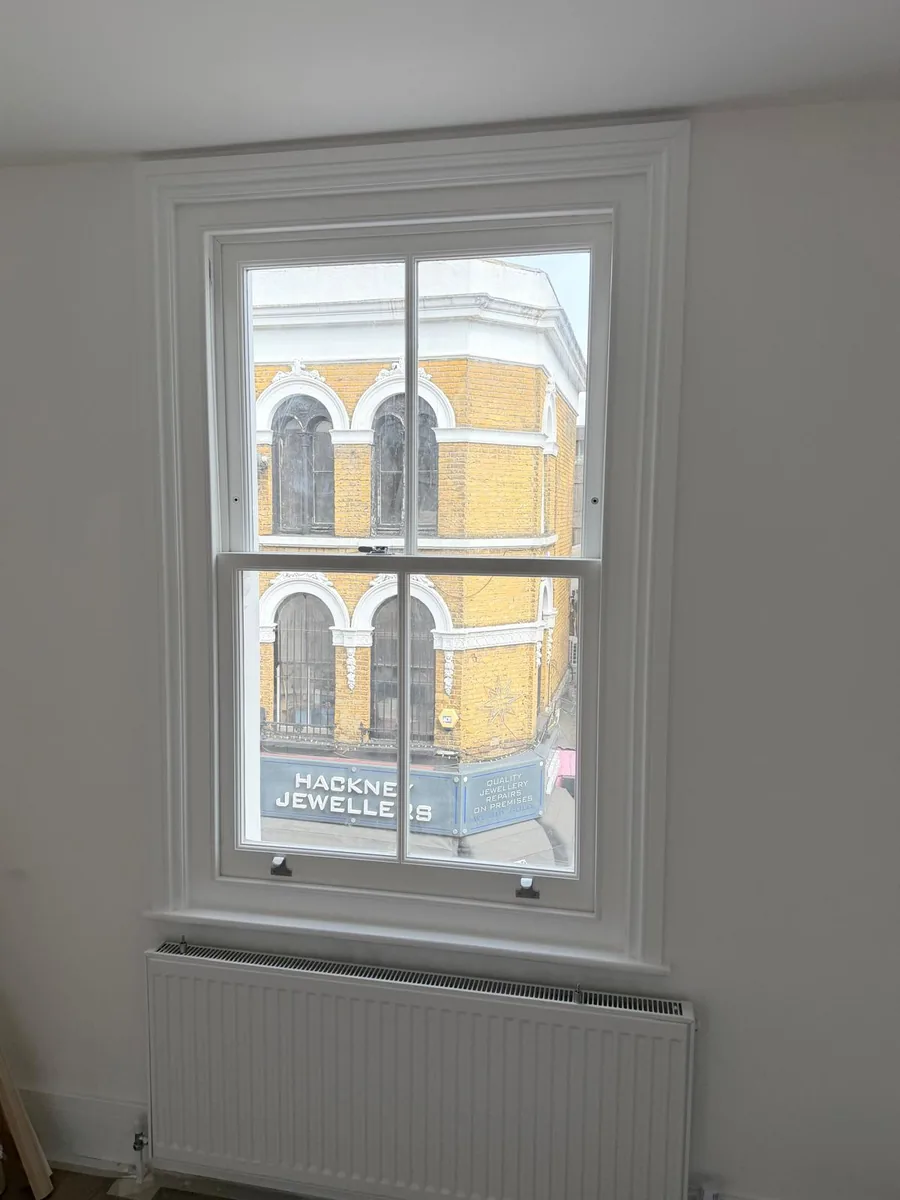
Because the sashes and boxes are manufactured together, every component is designed to work as one complete system. That gives smoother operation, more consistent alignment and a reduced risk of draughts in the future. The new timber also ages together, which reduces the likelihood of alignment problems or operational difficulties developing later. For more on the timber itself, see our guide to Accoya windows.
Whatever glass you are considering, ask whoever surveys your windows: Has the box been checked for square? Is there room inside for the heavier weights? Will any new timber need planing to fit? And how long would a replacement unit take if one were damaged?
Our priority is not simply to provide the lowest initial price. It is to recommend a solution that performs reliably and keeps its quality for many years. If you are unsure what your windows need, we can assess them during a free site survey and give you a straight answer.
Not currently. Lead times of around three months, limited overseas supply, costs of up to three times our standard glazing and the wait for any replacement unit lead us to recommend 12mm slimline heritage double glazing instead.
Not automatically. Whether a box can stay depends on its age, its condition, whether it is still straight and square, and whether there is room inside for the counterweights. The type of glass does not change any of those.
Not necessarily. Depending on the glass thickness and specification, the weight can be almost identical, so it would not automatically solve a lack of space for counterweights.
Certain vacuum glazing systems can achieve lower U-values than conventional slimline double glazing, and that is its main advantage. We still believe 12mm slimline heritage double glazing offers a more practical balance of thermal performance, cost, reliability and future maintenance.
Generally not, unless the boxes are relatively new (typically no more than seven years old), in excellent condition and have enough internal space for the required counterweights.
It needs to be confirmed on site. Photographs can suggest there may not be enough space, but a site survey is the way to know for certain, and ours is free.
Whether you need a sash window repair, full replacement, or heritage restoration — get in touch for honest advice and a free, no-obligation quote.
218 Hornsey Road, London, N7 7LL
Fill in the form and we'll get back to you within one business day — usually much sooner.
